Crochet Turtleneck Poncho Pattern for Everyday Elegance
A Crochet Turtleneck Poncho Pattern for Everyday Elegance turns simple stitches into a wearable statement piece. Warm, breezy, and endlessly versatile, this design pairs a snug neckline with a relaxed, draping body that flatters nearly any frame.
This project stands out because it blends structure with comfort in a way few patterns manage. A turtleneck poncho design offers coverage without bulk, while the striped color-blocking adds visual rhythm to an otherwise minimalist silhouette. Meanwhile, the cozy crochet layer works up quickly using basic stitches, so intermediate stitch counts do the heavy lifting instead of complicated shaping. The result feels tailored, though it never demands advanced technique. Consequently, it appeals to makers who want a polished finish without a steep learning curve.
The purpose of this pattern is to create a warm, easy-to-wear outer layer that transitions smoothly from loungewear to outdoor errands.
What Is This Pattern?
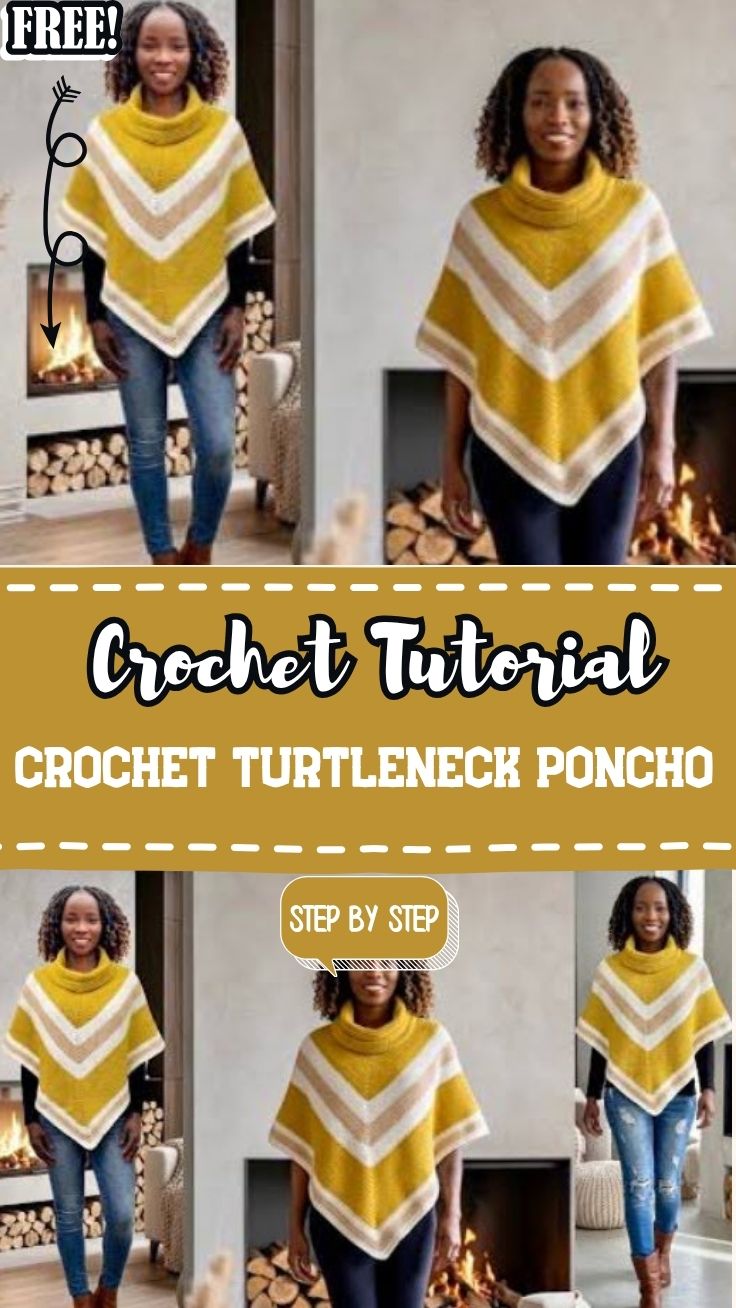
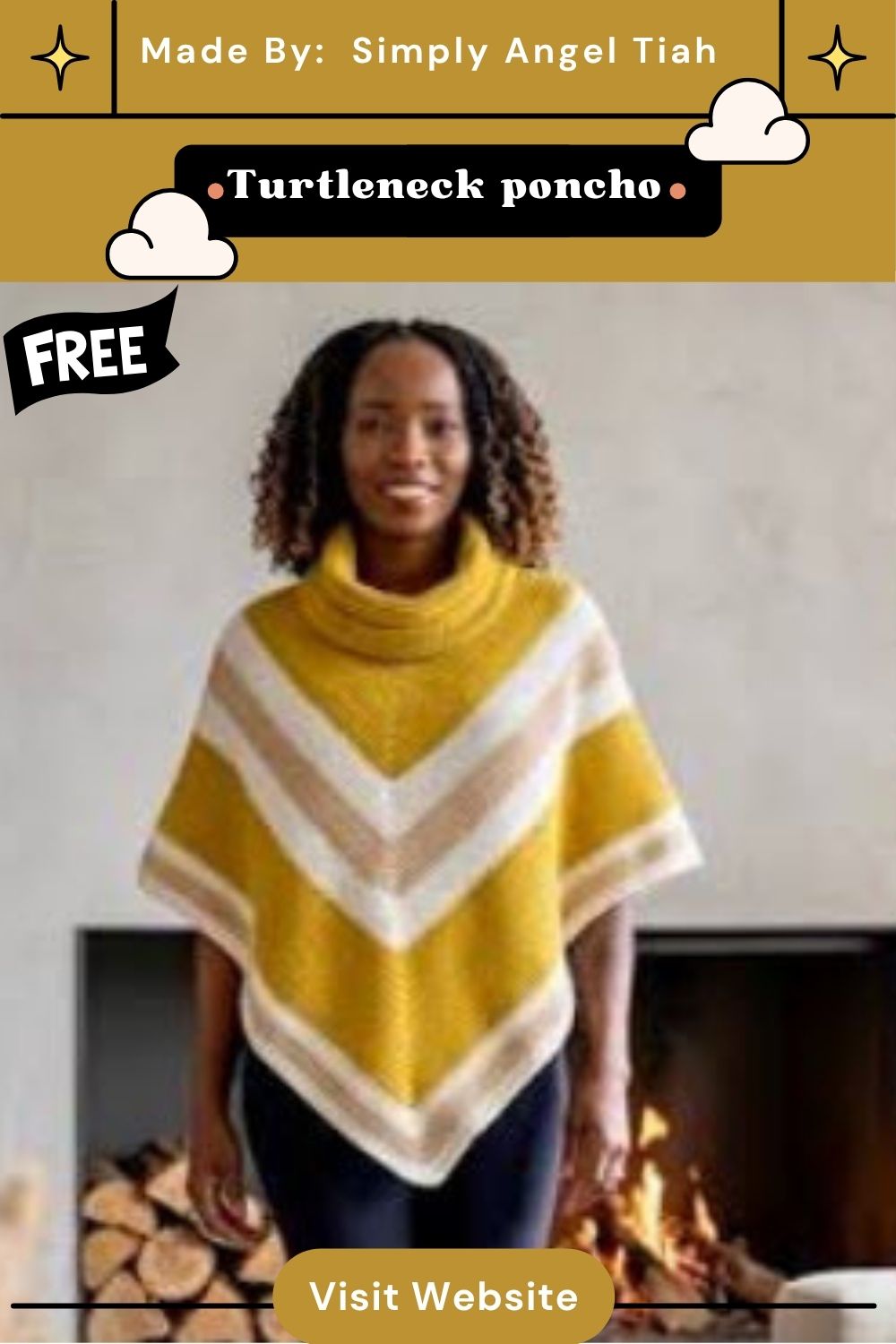
A crochet turtleneck poncho is a draped garment built from two mirrored panels joined at the shoulders and neckline. Unlike a traditional sweater, it skips sleeve shaping entirely, relying instead on angled seams to create movement. The neckline rises into a fitted collar, which gives the piece its “turtleneck” identity even though the body remains loose and flowing. Because the construction is panel-based, the stripes align diagonally once the seams close, forming a chevron-like pattern across the chest and back.
What Do You Need to Make It?
Before starting, gather a few essentials so the process stays uninterrupted:
- Worsted-weight yarn in a main color plus two or three contrasting shades
- A crochet hook sized to the yarn weight, typically 5.0mm to 5.5mm
- A tapestry or yarn needle for seaming
- Stitch markers to track panel edges
- Scissors and a measuring tape
Additionally, having a stitch pattern guide nearby helps beginners keep row counts consistent across both panels.
What Skills Does It Require?
Fortunately, this pattern relies on foundational techniques rather than advanced maneuvers. Makers should feel comfortable with single crochet, half double crochet, and basic color changes. Seaming, however, is where most of the skill actually lives. Joining two finished panels neatly, especially around a curved neckline, takes a bit of patience. Still, the technique is learnable within a single project, which makes this an approachable stretch goal for advancing beginners.
How Long Does It Take?
Most makers finish a crochet turtleneck poncho within six to ten hours of active work, though pacing varies. Someone working in short evening sessions might spread the project across a week, while a dedicated weekend crocheter could complete both panels and seaming in two focused days. Color changes add a little time, but they rarely slow momentum since the stripe sequence stays predictable once established.
What’s the Process Like?
The construction comes together in five key stages, moving from separate panels to a finished, seamed poncho.
Step 1: Align the Panel Edges at the Neckline
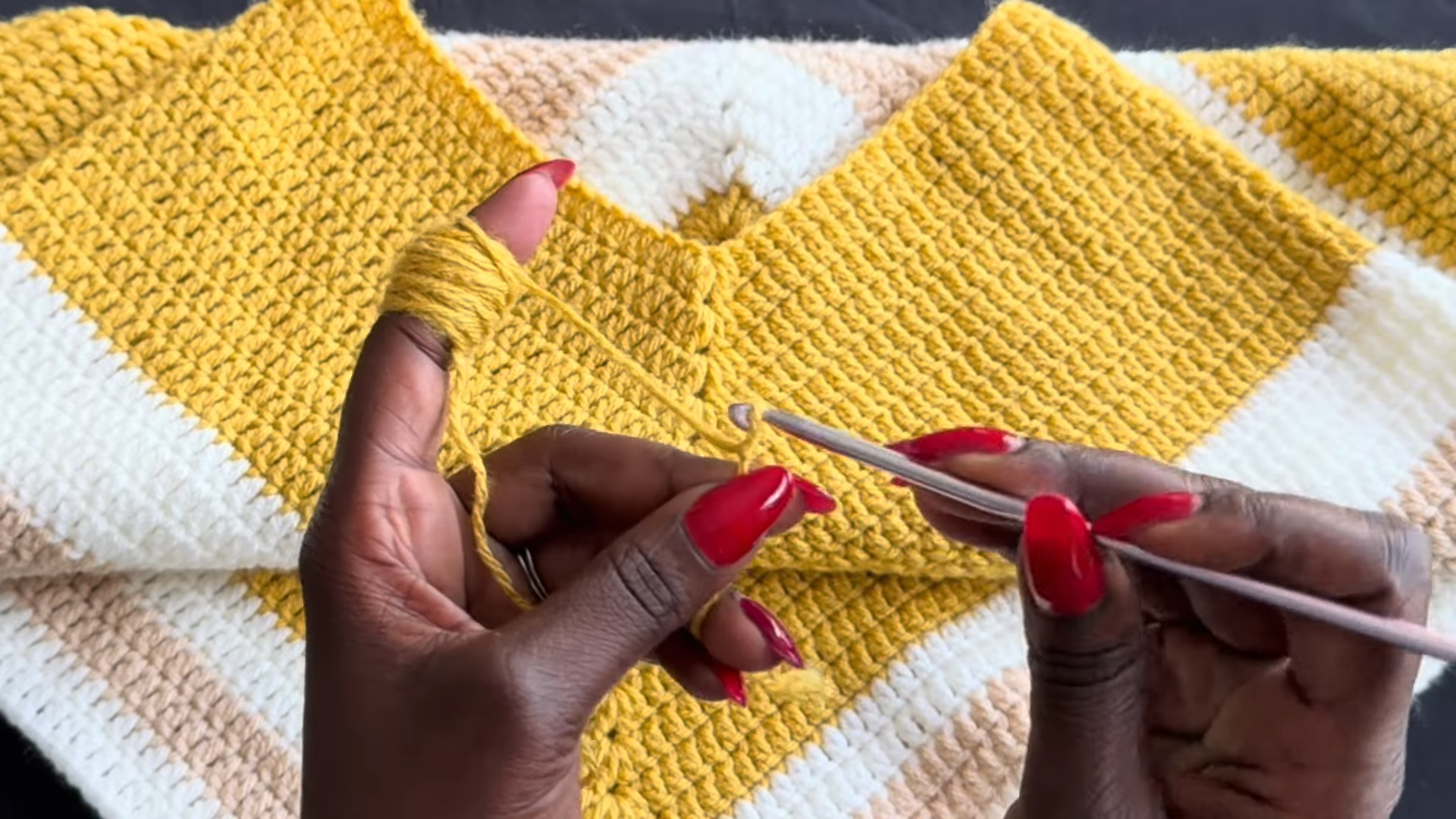
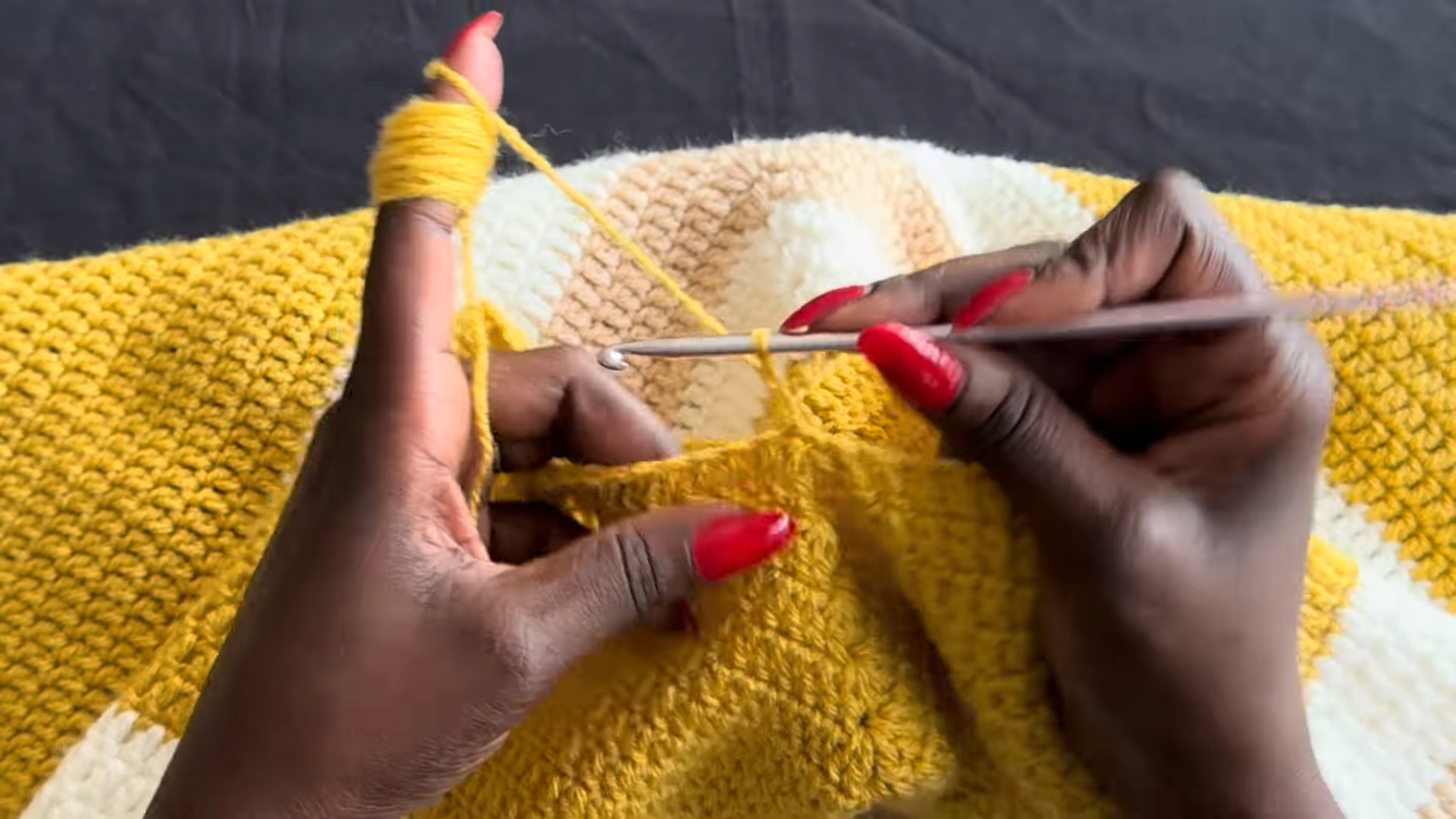
Begin by laying the two mustard-and-cream striped panels together, matching the top edges where the neckline will form. Hold the working yarn and hook ready at the point where the seam starts, keeping the edges even so the stripes will line up once joined.
Step 2: Join the Edges With a Slip Stitch Seam
Working with the hook and a fresh strand, insert it through both layers near the center point and pull the yarn through to begin the seam. Wrapping the tail around a finger keeps tension steady, which prevents the join from puckering as the stitches build.
Step 3: Check the Seam From the Inside
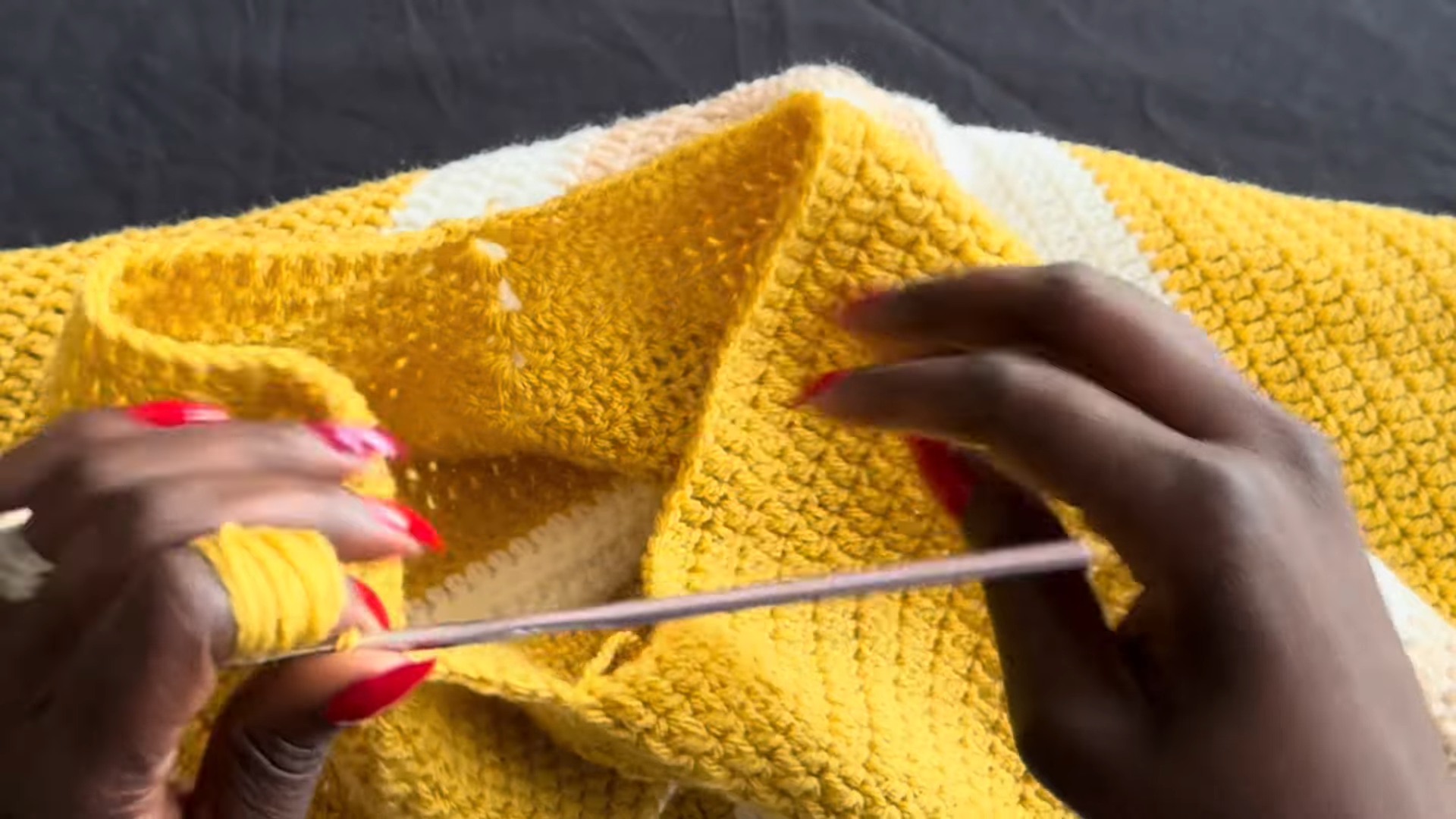
Periodically flip the fabric to view the seam from the wrong side. Checking the gap between panels this way confirms the join stays even and that no stitches have been skipped or doubled along the way.
Step 4: Continue the Seam Upward Toward the Collar
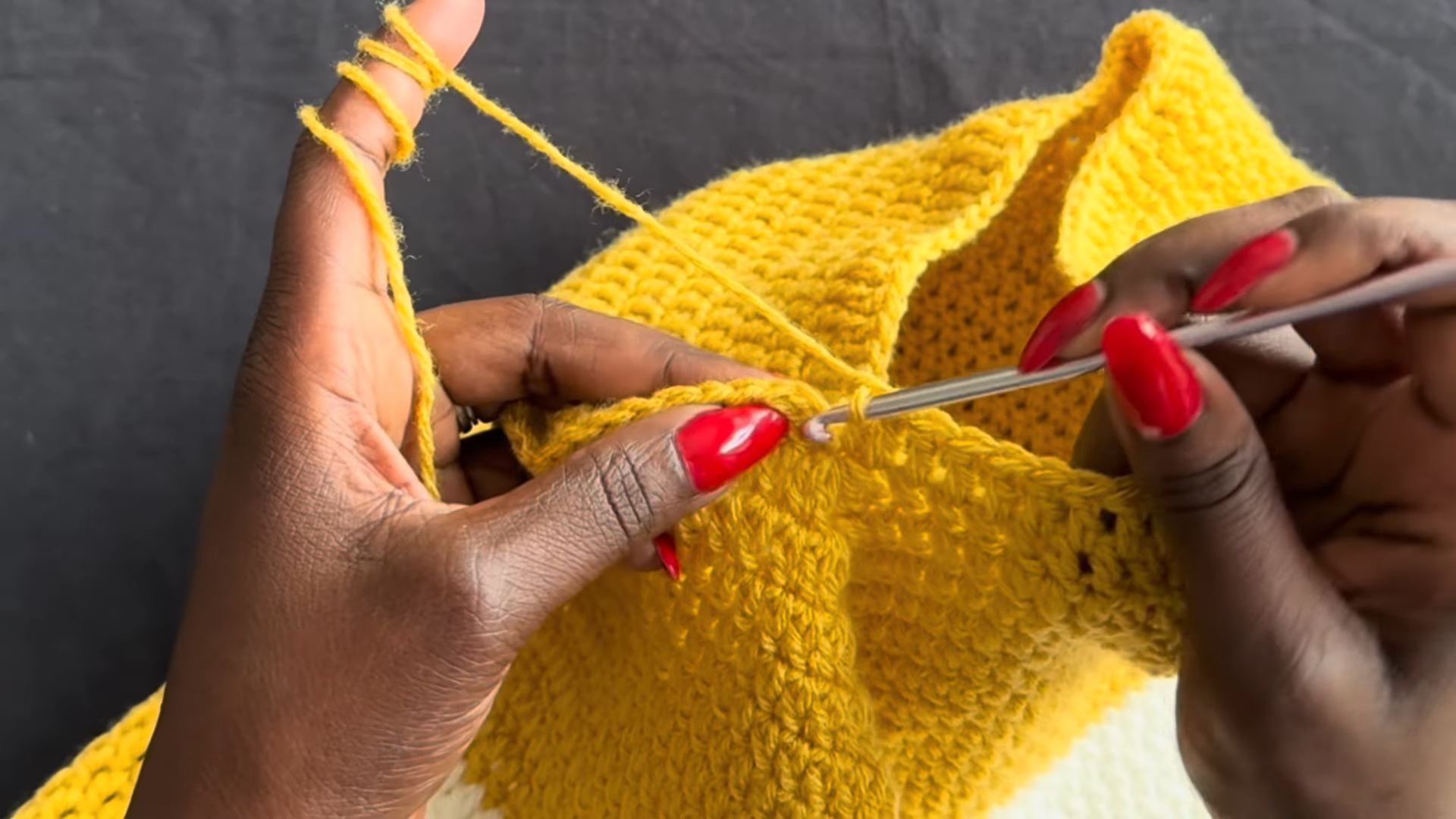
Keep working the hook through both layers, pulling each loop through smoothly as the seam climbs toward where the collar will rise. Maintaining consistent tension here keeps the neckline from flaring or pulling too tight.
Step 5: Finish and Shape the Turtleneck Collar
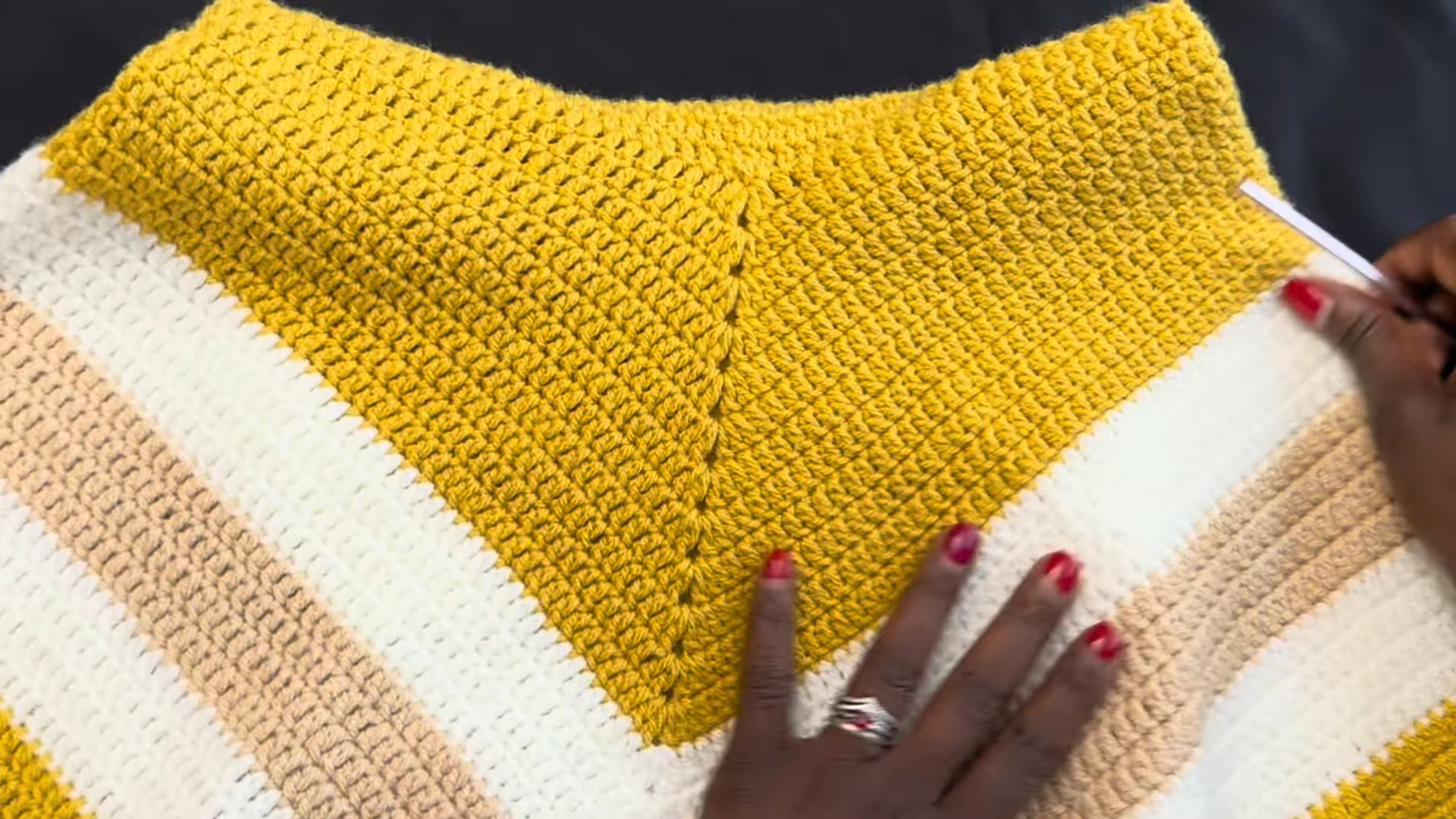
Once the seam closes, the panels meet to form a clean V-shaped junction at the chest, with the mustard collar rising neatly above the striped body. A final press or light steam helps the collar hold its shape and the seams lie flat.
What Usually Goes Wrong?
Even simple patterns have their pitfalls. Common issues include:
- Mismatched stripe alignment where panels don’t sync at the seam
- Uneven tension that causes the collar to gap or curl
- Skipped stitches along the seam, leaving small holes
- Color bleeding when yarns aren’t pre-washed
Recognizing these early prevents a lot of frogging later.
How Can Mistakes Be Avoided?
Careful planning solves most of these problems before they start. Counting rows on both panels before seaming ensures the stripes line up exactly. Similarly, using stitch markers at key transition points keeps the seam path visible and easy to follow. Practicing the seam stitch on a scrap swatch first also builds confidence, so tension stays even once the real seaming begins. Finally, pinning the panels together before stitching holds everything in place and reduces shifting.
What Can This Piece Be Used For?
A finished poncho serves more purposes than a typical pullover. Wearers might toss it over a t-shirt for a chilly morning walk, layer it above a dress for an evening out, or drape it across the shoulders while working from home. Because the fit stays loose, it also suits maternity wear or post-surgery recovery, where structured sleeves feel restrictive. Some makers even gift a finished piece as a housewarming throw substitute, since the drape mimics a small blanket when laid flat.
Is It a Good Project for Beginners?
Yes, though a slight learning curve exists around seaming. Beginners who have completed a scarf or simple sweater panel will find the stitch repeats familiar and manageable. The forgiving nature of a crochet turtleneck poncho also means minor tension inconsistencies blend into the overall drape rather than standing out. Therefore, newer crocheters gain confidence while still producing a genuinely wearable, elegant result.
What Makes It Worth Trying?
Few patterns offer this much payoff for a moderate time investment. The finished garment looks intentionally tailored, yet the technique underneath stays simple. Additionally, the color-blocked stripes let makers experiment with palettes without altering the pattern structure itself. Because the piece works up in two panels, it’s also easy to pause and resume without losing track of progress.
Why Are People Making This Right Now?
Cozy, oversized layers have surged in popularity as cooler months approach, and this style fits neatly into that trend. The combination of a fitted collar with a relaxed body answers a common wardrobe gap between structured sweaters and loose ponchos.
- It photographs beautifully for social platforms like Pinterest and Instagram
- The color-blocking trend keeps the design feeling current
- It works as both a gift project and a personal wardrobe staple
FAQ
How much yarn does a poncho like this typically require?
Most versions use between 800 and 1,200 yards total, depending on size and gauge.
Can the collar be made looser instead of fitted?
Yes, adding a few extra rows before decreasing softens the turtleneck into a cowl-style neckline.
Does the poncho work well in cotton yarn?
Cotton works, though it drapes heavier and offers less stretch around the collar than wool blends.
Can this pattern be resized for children?
Absolutely, scaling down the panel width and row count adapts the design for smaller frames easily.
Conclusion
A Crochet Turtleneck Poncho Pattern rewards makers with a piece that feels far more sophisticated than its stitch count suggests. Between the manageable techniques and the striking finished silhouette, this pattern earns its place in any autumn project queue. Give the seaming a little patience, and the collar will hold its shape beautifully for seasons to come.