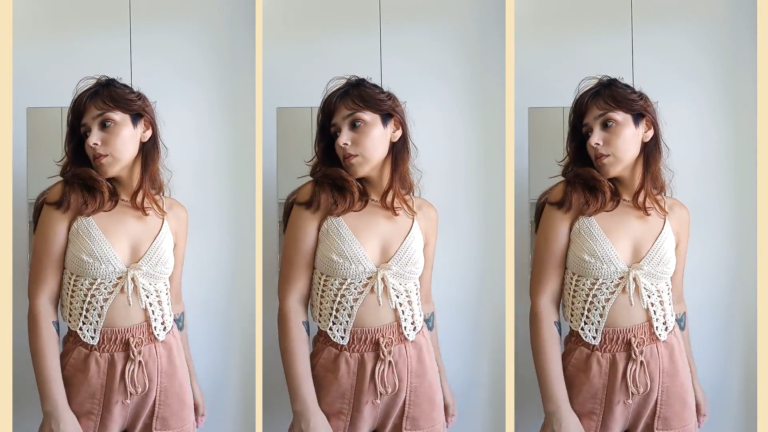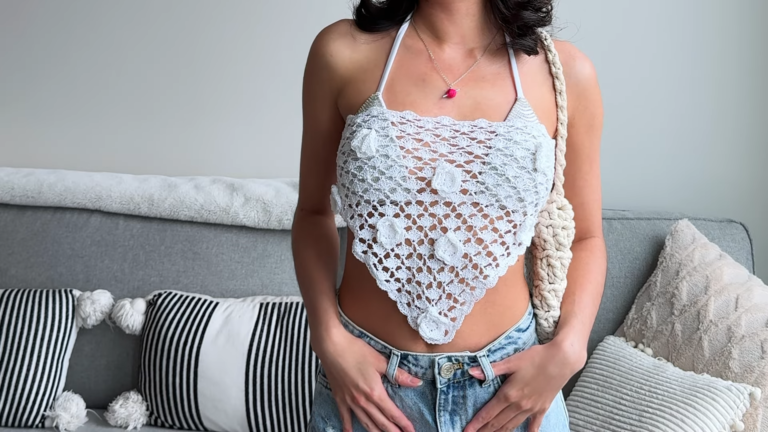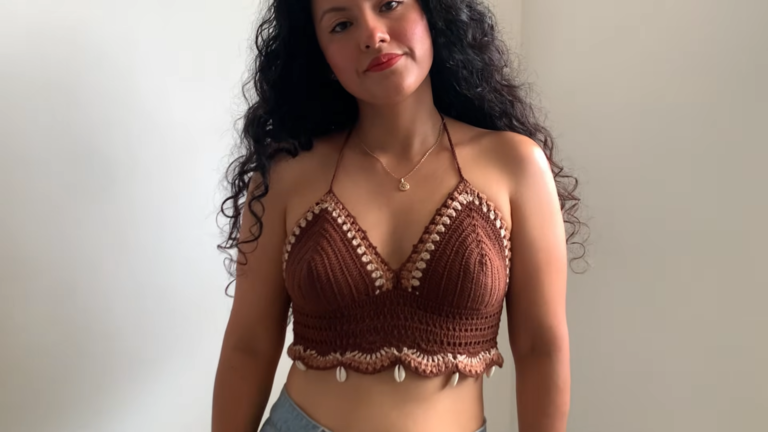
Exceptional Crochet Perlina Top Lacy Summer Pattern
Handmade charm meets breezy style with the Exceptional Crochet Perlina Top, an easy, beginner-friendly lacy summer crochet top pattern, perfect for thoughtful gifts and effortless warm-weather outfits.
Sunlit stitches meet effortless style in the Exceptional Crochet Perlina Top, a lacy summer crochet top pattern with airy lace panels and an easy video tutorial. Beginner-friendly and customizable, it works up fast for beach cover-ups, brunch layering, or heartfelt handmade gifts.

Choose soft cotton, play with color-blocking, and treat yourself with credit card rewards while stocking yarn; if you’re learning, pair the tutorial with curated online courses. If this sparks joy, save it to Pinterest or share it with someone who loves slow, sunlit crochet days.

Exceptional Crochet Perlina Top Lacy Summer Pattern
If you’re craving a breezy, beginner-friendly project that looks polished yet works up quickly, this Exceptional Crochet Perlina Top Lacy Summer Pattern is for you. Because it uses simple granny-style clusters and clean double crochet rows, it feels soothing to stitch and easy to customize. Moreover, the top is built from two flat panels, front and back, so the construction stays straightforward while the fit looks flattering. Consequently, whether you’re crafting a weekend wardrobe refresh or your very first garment, this pattern will guide you step by step toward a soft, swishy top with lovely gathers and graceful drape.
What You’ll Make (At a Glance)
You’ll create a two-panel summer top that features:
- A supportive top edge with a straight double-crochet foundation.
- A lacy granny-stitch band across the bust for breathability and style.
- A gently gathered bodice formed by an increased row, which adds swing and movement.
- Clean color-blocking in lilac and sand (plus optional taupe), with neatly matched side seams.
- Optional elastic or ribbon for additional adjustability, along with optional straps.
Because the entire design relies on simple stitches, confident beginners can follow along easily. Additionally, the sizing is driven by your chest measurement, so the top tailors to your body rather than the other way around.
Supply List
- Yarn: Cotton DK (light/3) in two colors.
- Lilac (for the lacy band and optional lower stripes)
- Sand/Taupe (for the bodice)
- Yardage varies by size; however, for a cropped-to-hip length in DK cotton, most sizes use approximately 250–450 g total. Because cotton has minimal stretch, it provides crisp stitch definition and a cool, breathable feel.
- Hooks:
- 3.5 mm for the granny/lacy section and the first few rows (as shown in the tutorial)
- 4.0 mm for the bodice rows (to encourage soft drape)
- Notions:
- Tape measure (to capture chest circumference)
- Stitch markers (to mark row edges and color changes)
- Tapestry needle (for seaming and weaving ends)
- Scissors
- Optional: 1–2 m of narrow elastic or ribbon for the top edge
- Optional: Extra yarn in a third shade (e.g., taupe) for accent stripes
Note: In the video-based example, the maker begins with approximately 42 cm per panel at the top edge (semi-circumference) and finishes with approximately 57 cm after the increase row, which produces a gentle flare. Moreover, the total panel length is about 34–35 cm; however, you can extend it for a longer silhouette.
Sizing and Measuring (Beginner Friendly)
Before you chain a single stitch, measure your chest circumference above the bust (at the upper chest). Then, divide by two to get your semi-circumference, which is the width of each panel at the top edge.
- Example: If your full chest measures 84 cm, your semi-circumference is 42 cm. Therefore, your starting chain should equal approximately 42 cm (not counting extra turning chains).
- In the sample, 63 chains plus 2 turning chains measured roughly 42 cm with a 3.5 mm hook and DK cotton. Because everyone’s gauge varies, measure your chain against the tape measure rather than relying on a fixed number.
Gauge tip: Because this pattern is based on actual measurements, you can proceed even if your gauge is a little off. Nevertheless, to improve consistency, keep your tension relaxed during the granny rows and steady during the bodice rows.
Multiple tip: For neat granny clusters, work a chain count in a multiple of 3, then add 2 chains for the foundation dc edge. Consequently, your stitch pattern aligns smoothly.
Construction Overview and Making Time
You will make two identical panels (front and back) and seam them along the sides. Because the pattern is modular, you can try on a single panel against your body to confirm length and flare before finishing the second.
- Measuring and foundation setup: 10–20 minutes
- Lacy granny band (upper section): 45–75 minutes per panel
- Increase setup row (to create gathers): 15–25 minutes per panel
- Bodice rows in sand: 60–90 minutes per panel (for about 10 rows)
- Optional color stripes (e.g., lilac and taupe): 30–50 minutes per panel
- Seaming and finishing: 20–40 minutes total
- Optional straps or elastic: 15–30 minutes
Overall, expect approximately 4.5–6.5 hours, depending on your pace and length choices.
Step-by-Step Instructions for (Crochet Perlina Top)
- Foundation Edge (Top Stability) — 10–20 minutes per panel
- First, chain to your semi-circumference length (multiple of 3), then add 2 chains for your turning edge. For instance, the sample begins with 63 chains + 2, which measured approximately 42 cm.
- Next, work 1 double crochet (dc) into the second chain from the hook (counts as your first dc) and continue dc across the entire chain. Because this top edge supports the granny band, keep your tension steady and the row straight.
Why this matters: A double-crochet foundation row adds structure to the neckline; therefore, it resists stretching and keeps the upper edge neat.
- Lacy Granny Band (Upper Section) — 45–75 minutes per panel
Row A (granny setup):
- Chain 3 for your first dc, then chain 1 for spacing. Skip 2 foundation dc, and in the next stitch, work 3 dc. Chain 1, skip 2, 3 dc in the next stitch; continue this sequence across. To finish the row, chain 1, skip 2, and place a dc into the last stitch. Then, turn.
Row B (granny into spaces): - Chain 3, then work 2 dc into the first chain space to complete a 3-dc group. Chain 1, then place 3 dc into each chain space across. Finally, dc into the top of the turning chain or complete the edge as established, and turn.
- Repeat Rows A and B, alternating, until the lacy band measures about 14.5 cm (or your desired coverage across the bust). Because the granny pattern naturally relaxes, the upper edge will remain slightly narrower while the clusters widen gently as you work.
Tip: If you want a taller lace band, simply add 1–3 more repeats. Conversely, if you prefer minimal lace, stop once the bust is modestly covered.
- Color Change and Increase Setup (Start of the Bodice) — 15–25 minutes per panel
- Change to sand (or your chosen bodice color) at the end of a granny row. To secure a clean join, do not complete the final dc of the last stitch; instead, pull through with the new color to finish the stitch. Then, turn.
- Now, chain 3 (counts as dc). In the first chain space, place 2 dc to form your first increase. Next, place 1 dc in the first dc of the next 3-dc group, 1 dc in the second dc, and 2 dc in the third dc (another increase). Then, place 1 dc in the next chain space. Continue this sequence—(space) 1 dc, (first) 1 dc, (second) 1 dc, (third) 2 dc, (space) 1 dc—across the row.
- Optionally, for extra flair, you can add an increase at the very beginning and very end as well; however, avoid stacking too many increases consecutively, because the fabric could ripple or balloon.
Result: After this single increase row, your panel width expands noticeably (for example, from approximately 42–44 cm to around 57 cm), which creates those soft, flattering gathers.
- Bodice Rows in Sand (Flowy Body) — 60–90 minutes per panel
- Switch to a 4.0 mm hook for a looser drape. Then, work straight rows of dc across—no increases—for approximately 10 rows in sand.
- Because you’re working even rows, count stitches at the end of the first sand row and keep that count consistent. Consequently, your side edges will remain straight for neat seaming.
- Optional Color Play (Lilac and Taupe Stripes) — 30–50 minutes per panel
- After the 10 sand rows, switch back to lilac for about 7 rows of dc, then to taupe for approximately 2 rows to finish. Alternatively, if you love a monochrome look, continue with sand only. Meanwhile, if you want a more dramatic sweep, introduce one more increase row at your color change; however, place increases at the sides rather than all at once to preserve balance.
- Length Check and Second Panel — 5–10 minutes check; 2.5–3.5 hours to complete
- Lay your first panel flat and measure the total length. In the sample, the full length is about 34–35 cm. If you prefer a longer top, add more dc rows before color changes or repeat the last color band.
- Then, make the second panel to match: same chain count, same number of granny repeats, and the same bodice row count. Because consistency matters, keep your tension similar and your color joins aligned.
- Seaming the Sides — 20–30 minutes total
- Place panels right sides together (RS facing in, wrong sides out). Next, seam the sides using whip stitch or mattress stitch, matching yarn color to each block: seam sand sections with sand, lilac with lilac, and taupe with taupe. Consequently, the joins become nearly invisible on the right side.
- After both sides are seam, turn the top right side out and smooth the edges with your hands.
- Optional Top Edge and Straps — 15–30 minutes
- Elastic casing (optional): If you’d like extra security at the top edge, add 1 round of dc across the neckline; then fold to the inside and sew down as a casing, leaving a small opening. Next, thread the narrow elastic through, try on, adjust the tension, and close the opening. Alternatively, feed a ribbon through the granny eyelets for a bow-tied finish.
- Straps (optional): For simple straps, chain 25–30 cm (adjust to taste), then work 1–2 return rows of sc or dc for sturdiness. Attach at front and back, trying on to confirm length before securing. Because the top edge already has structure, straps are optional; however, they can add style and confidence.
Beginner Tips for Beautiful Results for (Crochet Perlina Top)
- Measure twice: Because your starting chain determines the top width, measure the chain against your tape measure rather than counting stitches alone. Consequently, your fit will be accurate from the start.
- Change hooks wisely: Use 3.5 mm for the granny section to keep the lace tidy; then use 4.0 mm for the bodice to relax the fabric. Therefore, the top edge stays stable while the body floats.
- Weave as you go: While color-blocking, weave tails into the next few stitches immediately; as a result, your wrong side stays clean, and finishing goes faster.
- Test flare early: After the increase row, pause and lay the panel flat. If you want more fullness, add an extra increase at each side in the next row rather than bunching increases all at once.
- Block lightly: Because cotton relaxes with steam, a brief hover with a steam iron can smooth the lace and settle the gathers—just avoid direct steam on elastic, if used.
Common Mistakes and How to Avoid Them
- Over-increasing in one row: If you stack increases across many consecutive stitches, the fabric may ruffle too much. Instead, space increases thoughtfully or add another small increase row later. Consequently, you’ll preservea graceful drape.
- Tight top edge: If your foundation dc row is tight, the neckline may feel restrictive. To fix this, either start with a larger hook for the chain/foundation row or add the optional elastic casing for flexibility.
- Uneven side seams: If you don’t match color blocks and stitch counts, seams can skew. Therefore, count your rows on both panels and seam like to like.
- Twisted chains: If your first row twists as you work into the chain, your edge may spiral. Instead, work into the back bumps of the chain and keep the chain untwisted on a flat surface.
- Ignoring try-ons: If you never check length until the end, you may overshoot your ideal hem. Instead, pause after each color change to check the length against your body.
Variations You’ll Love for (Crochet Perlina Top)
- Play with lace height: Extend the granny band for a more romantic look, or shorten it for a sporty, higher-bust style.
- Shift the palette: While lilac and sand look airy and modern, you can swap to coral and cream for a beachy vibe or charcoal and blush for an evening look.
- Add strategic flair: Introduce a second increase row at the start of your first bodice color change for a fuller peplum effect. Conversely, skip the second increase to keep the silhouette sleek.
- Strap choices: Replace simple straps with braided cords or i-cord for texture. Alternatively, work delicate chain ties and knot them into bows at the shoulders for a dainty finish.
- Hem accents: Add a final row of crab stitch (reverse single crochet) at the hem for a subtle corded edge. Consequently, your top will look professionally framed.
Finishing Tips for a Polished Garment for (Crochet Perlina Top)
- Seam color to color: Use lilac yarn to seam lilac sections and sand for sand sections, so the seam disappears into the fabric. Therefore, the outside remains pristine.
- Steam with care: Hover the iron about 1–2 cm above the fabric, using short puffs of steam. As a result, the lace opens, and the gathers relax without flattening the bodice.
- Weave ends securely: Thread yarn tails through the purl bumps of several stitches on the wrong side, then change direction once (like a tiny “S” path). Consequently, your ends resist loosening in the wash.
- Gentle wash: Hand wash in cool water, reshape, and lay flat to dry. Because cotton can grow when wet, reshaping prevents length creep.
Clear Sizing Guidance (Customize with Confidence)
Because this pattern begins with your semi-circumference, you control the fit from the start. Here’s a simple sizing roadmap:
- Step 1: Measure upper chest circumference above the bust.
- Step 2: Divide by two (this is your target top width per panel).
- Step 3: Chain to match that measurement in centimeters, using a multiple of 3 plus 2 (for the foundation dc edge).
- Step 4: Work the granny band until it measures about 14.5 cm (or your preferred bust coverage).
- Step 5: Work the increase setup row in sand to create your flare. Because the increased row widens the panel significantly (e.g., up to around 57 cm in the sample), adjust spacing if you need slightly less or more volume.
- Step 6: Add straight dc rows to your desired length, trying on periodically and adjusting color blocks to taste.
If you’re between two preferred widths, err on the smaller chain count and plan to add the optional elastic casing or straps for security. Conversely, if you want a looser look, add a few chains initially, then keep increasing modestly so the bodice doesn’t balloon.
Why This Pattern Feels “Exceptional”
Because the Exceptional Crochet Perlina Top Lacy Summer Pattern blends structure with softness, the result feels refined yet relaxed. The stable upper edge supports the neckline; meanwhile, the granny band breathes in warm weather. Then, a single increase row transforms the bodice into a floaty shape that skims rather than clings. Additionally, color-blocking gives you endless ways to personalize the look, while simple seaming and optional elastic make finishing stress-free. Consequently, the pattern stays accessible for beginners yet flexible enough for experienced makers to riff on.
Time Planner (So You Actually Finish)
- Measure and plan: 10–20 minutes
- Panel 1:
- Foundation DC row: 10–15 minutes
- Granny band (to 14.5 cm): 45–75 minutes
- Increase setup row in sand: 15–25 minutes
- Bodice in sand (10 rows): 30–45 minutes
- Optional lilac (7 rows): 20–30 minutes
- Optional taupe (2 rows): 10–15 minutes
- Panel 2: Repeat the same number of times as Panel 1
- Seaming both sides: 20–30 minutes
- Optional elastic or straps: 15–30 minutes
Because the steps are bite-sized, you can complete the top over a weekend or spread it out over a few evenings.
Troubleshooting at a Glance
- Wavy hem? Reduce a few stitches evenly across one row or steam lightly to relax excess width.
- Tight arm area? Remove 1–2 rows at the top or add straps to adjust where the top sits on your torso.
- Visible color jogs? Change colors on the wrong side at the edge, carry tails up neatly, and weave in as you go.
Closing Encouragement for (Crochet Perlina Top)
Ultimately, the Exceptional Crochet Perlina Top Lacy Summer Pattern shines because it feels simple to start, soothing to repeat, and satisfying to wear. Since you measure your own semi-circumference, your top will fit your body from the very first stitch. Moreover, the granny lace and gentle gathers add charming texture without complicated shaping. Therefore, grab your lilac and sand skeins,