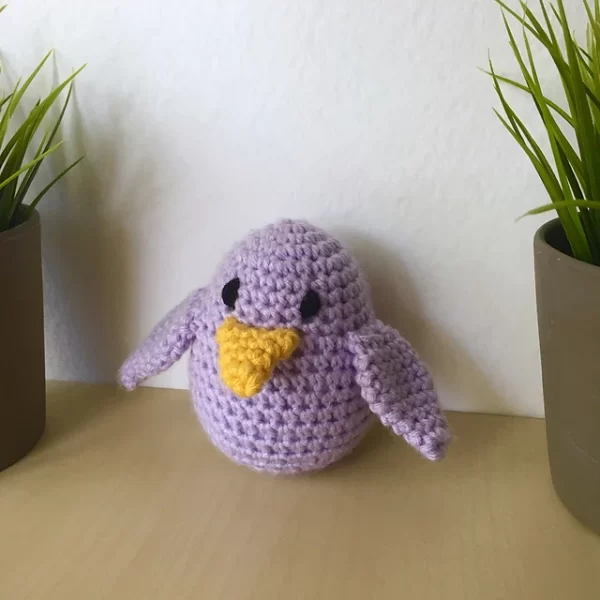
A tiny amigurumi penguin has a special kind of charm, round, simple, and instantly recognizable. Plus, this mini crochet penguin pattern is small enough to finish in one cozy sitting.
Amigurumi is a crochet technique that turns yarn into small stuffed characters using tight stitches and simple shaping. First, a few rounds create a smooth base; next, increases and decreases form the curves. After that, tiny parts like wings, feet, and a beak bring the character to life.

This mini penguin amigurumi is so enjoyable because it’s so customizable. You can play with different yarn textures, add blush cheeks, change the beak color, or give it a tiny scarf. The stitches are repetitive in a good way, so you can relax while still seeing progress fast. Plus, it is a perfect confidence booster if you want an easy crochet keychain that looks neat and professional.
Practical uses are endless: clip it to your keys as a cheerful crochet penguin keychain, hang it on a backpack zipper for a cute charm, or use it as a small gift topper that doubles as a keepsake. It also makes a fun party favor or stocking stuffer when you crochet a whole little penguin flock.
Materials Needed (Exact Measurements)
- Yarn type and weight: Smooth DK (Category 3) or light worsted yarn
- Black yarn (main body): 25 g (approx. 55–70 m)
- White yarn (belly/face): 15 g (approx. 30–40 m)
- Yellow or orange yarn (beak + feet): 10 g (approx. 15–25 m)
- Crochet hook size: 2.75 mm or 3.0 mm (choose the smaller size for tighter stitches)
- Safety eyes (optional): 6–8 mm (small size for a cute face)
- Stuffing (polyfill): 10–15 g
- Yarn needle: 1
- Stitch marker: 1 (or a short scrap of yarn)
- Keychain ring (optional): 1 ring, 25–30 mm (plus a small jump ring if available)
Skill Level
Beginner
Making Time (Overview)
Total estimated time: 2–3.5 hours
- Body (head + body shaping): 60–90 minutes
- Feet + beak: 20–35 minutes
- Wings: 20–30 minutes
- Face + assembly + finishing: 20–55 minutes
Body (Main Shape of the Penguin) (Making time: 60–90 minutes)
Start with the head
- First, with black yarn, make a magic ring.
- Next, crochet 6 single crochet (sc) into the ring (6).
- After that, increase to form a smooth round head:
- Round 2: inc in each stitch (12)
- Round 3: (sc, inc) repeat (18)
- Round 4: (2 sc, inc) repeat (24)
- Next, crochet 2 rounds of sc (24) to give the head a little height.
Meanwhile, place a stitch marker at the start of each round to keep the shaping accurate.
Create the body
- First, continue in black and begin widening slightly for the body:
- Round 7: (3 sc, inc) repeat (30)
- Next, crochet 2–3 rounds of sc (30) to build the penguin’s round belly area.
- After that, start tapering gently toward the bottom:
- Next round: (3 sc, dec) repeat (24)
- Next round: sc around (24)
- Next round: (2 sc, dec) repeat (18)
Later, the bottom will close neatly with decreases, so the penguin sits nicely.
Stuff and shape the body
- First, begin stuffing once the body is about 70% complete.
- Next, add the polyfill in small pinches, pushing it into the head and sides to create a smooth curve.
- After that, avoid overstuffing the base, because a penguin looks cuter when it sits slightly flat.
- Finally, close the bottom:
- Next round: (sc, dec) repeat (12)
- Next round: Dec around (6)
- Then fasten off and sew the opening closed.
Optional belly patch (simple and beginner-friendly):
- First, with white yarn, crochet a small oval: chain 7.
- Next, sc in the second chain from the hook, sc across, then add 3 sc in the last chain to turn.
- After that, sc back along the other side and add 2 sc in the last chain to finish the oval.
- Finally, stitch this oval to the front center of the penguin.
Feet and Beak (Making time: 20–35 minutes)
Make the feet
- First, with yellow or orange yarn, make 2 feet as small flat ovals:
- Magic ring, 6 sc
- Next round: (sc, inc) repeat (9)
- Then: sc around (9) and fasten off with a long tail
- Next, flatten each foot and stitch it lightly to keep it flat.
After that, pin both feet to the bottom front area, spacing them evenly so the penguin can “stand.”
Create the beak
- First, with yellow or orange yarn, make a tiny triangle:
- Magic ring, 3 sc
- Next round: (sc, inc) repeat (5)
- Then fasten off, leaving a tail for sewing
- Next, pinch the piece slightly to form a beak shape.
- Finally, sew the beak between the eye positions.
Meanwhile, a smaller beak looks extra cute on mini penguins, so keeping it tiny usually works best.
Crochet the wings
- First, with black yarn, crochet 2 wings as half-circles:
- Magic ring, 6 sc
- Next round: inc around (12)
- Then fasten off with a long tail
- Next, fold each wing slightly (not fully in half, just a gentle curve).
- Finally, sew wings to the sides of the body, slightly below head level.
After that, check that both wings sit at the same height, because symmetry makes the penguin look polished.
Face and Assembly (Making time: 20–55 minutes)
Add safety eyes or embroider eyes
Option A: Safety eyes (6–8 mm)
- First, insert eyes between the upper head rounds, about 5–7 stitches apart.
- Next, test the look by holding the beak in place before locking the backs.
- Finally, secure the safety backs tightly.
Option B: Embroidered eyes (great for keychains and small kids)
- First, use black yarn or embroidery thread.
- Next, stitch two small eyes (tiny dots, short lines, or “U” shapes).
- After that, add a small white highlight stitch if desired for sparkle.
Attach all the parts
- First, sew the belly patch (if using) onto the center front.
- Next, sew the beak centered above the belly patch.
- After that, sew the feet to the lower front so they peek out evenly.
- Then, attach the wings on both sides at the same height.
- Finally, weave in all ends securely and trim.
Beginner-friendly tips for neat assembly and symmetry
- First, pin pieces in place and step back for a quick check before sewing.
- Next, count stitches from the center line for both sides, because matching placement is easier than guessing.
- Meanwhile, use smaller sewing stitches, since tiny stitches hide better in amigurumi fabric.
- After that, weave yarn tails through several stitches inside the body, because a keychain gets tugged often.
Keychain option:
- First, thread the arm through the top of the head to create a tight hanging loop.
- Next, attach the keychain ring to the loop.
- Finally, knot, weave in, and tug-test the loop for strength.
Special Features
- Texture: Smooth, rounded body with crisp color contrast between black and white, plus bright feet and beak
- Expression: Friendly penguin face that can look cheerful with a tiny stitched smile
- Size: Perfect for a crochet penguin keychain, a small plush toy, or a winter ornament
Sizing Tips
Yarn weight and hook size quickly affect the final size. First, a thicker yarn makes a larger penguin, even with the same stitch count. Next, using a slightly smaller hook tightens the stitches and helps keep the stuffing hidden.
- DK yarn + 2.75–3.0 mm hook: mini size (great for keychains)
- Worsted yarn + 3.5–4.0 mm hook: small plush size
- Fingering yarn + 2.25–2.5 mm hook: tiny ornament size
Meanwhile, tighter tension creates a smoother finish, especially around the decreases at the bottom.
Finishing Tips
- Neat stitching techniques: Use consistent single crochet and place decreases evenly around the round.
- Secure knots: Tie off inside the body, then weave ends through 6–10 stitches before trimming.
- Balanced stuffing: Add stuffing in small amounts, shaping often; after that, stop once the penguin feels firm but still squeezable.
- Clean and tidy finish: Close the final hole with a neat needle cinch, then hide the tail inside.
Finally, gently roll the penguin between your hands to smooth out any lumpy spots in the stuffing.
Common Mistakes to Avoid
- Loose stitches: Gaps show stuffing; switch to a smaller hook or tighten the tension.
- Overstuffing the body: A too-full penguin can look stretched; therefore, keep the base slightly flatter.
- Incorrect placement of facial features: Eyes placed too high or too close change the expression; after that, the beak may not fit nicely.
- Inconsistent stitch tension: Uneven tension makes bumps; meanwhile, consistent tension keeps the body smooth.
Variations & Customization Ideas
- Change the colors: Try gray and white for a softer look, or pastel shades for a spring penguin.
- Create a penguin family: Make one with DK yarn, then make a bigger “parent” using worsted yarn and a larger hook.
- Add accessories: Crochet a tiny scarf, a mini beanie, or earmuffs for extra charm.
- Switch the face style: Add rosy cheeks, sleepy eyes, or a tiny embroidered smile.
Later, a small star or heart appliqué on the belly can make the penguin feel extra special.
Conclusion
This amigurumi penguin pattern is a cozy beginner project that feels cute from the first round to the final stitch. First, the body comes together quickly; next, the tiny wings, feet, and beak add personality; finally, the face brings everything to life. Finally, turn the finished penguin into a crochet keychain, a small plush, or an ornament, then experiment with colors and accessories to create a one-of-a-kind penguin collection.