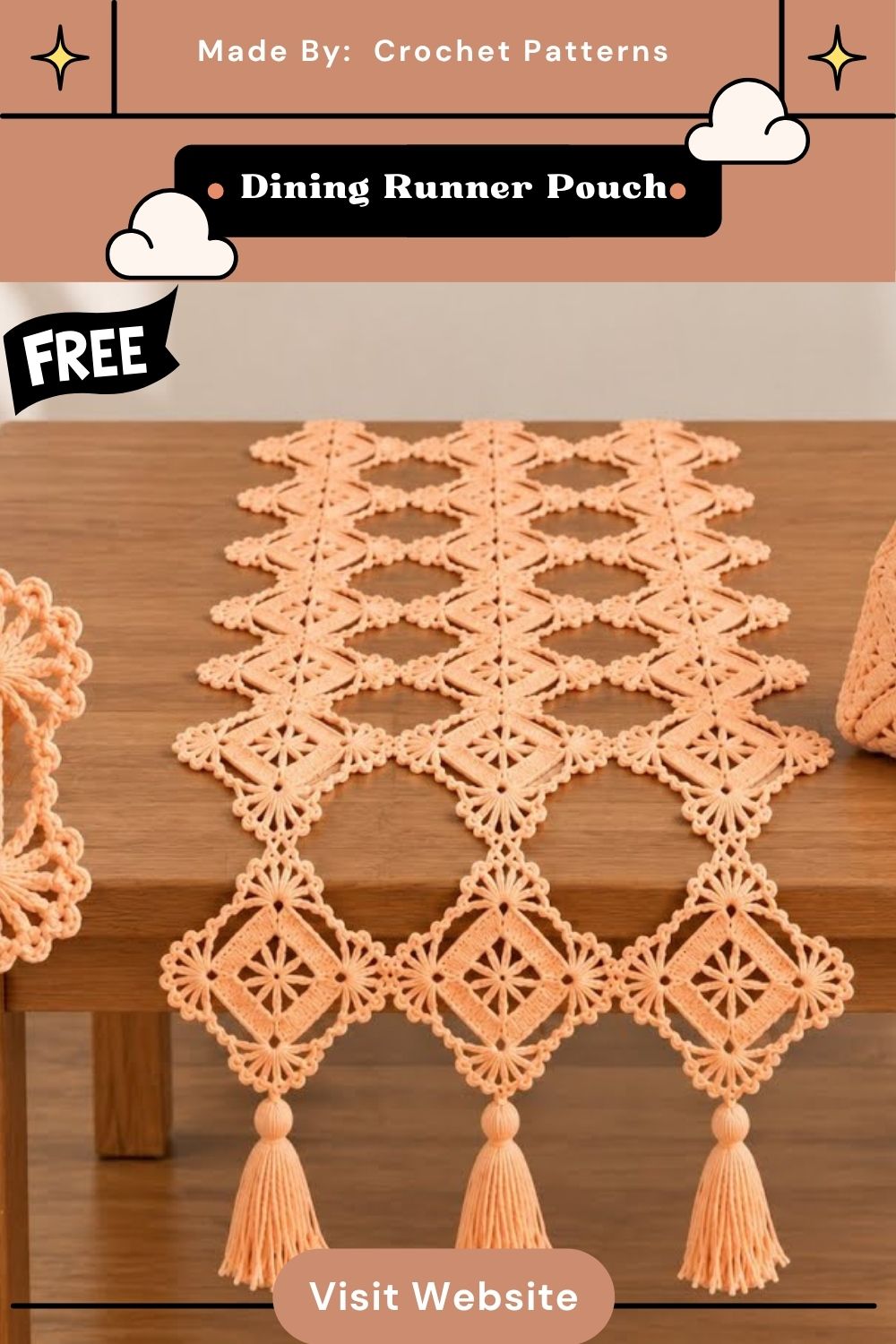
Simple Crochet Dining Runner & Coaster Pattern
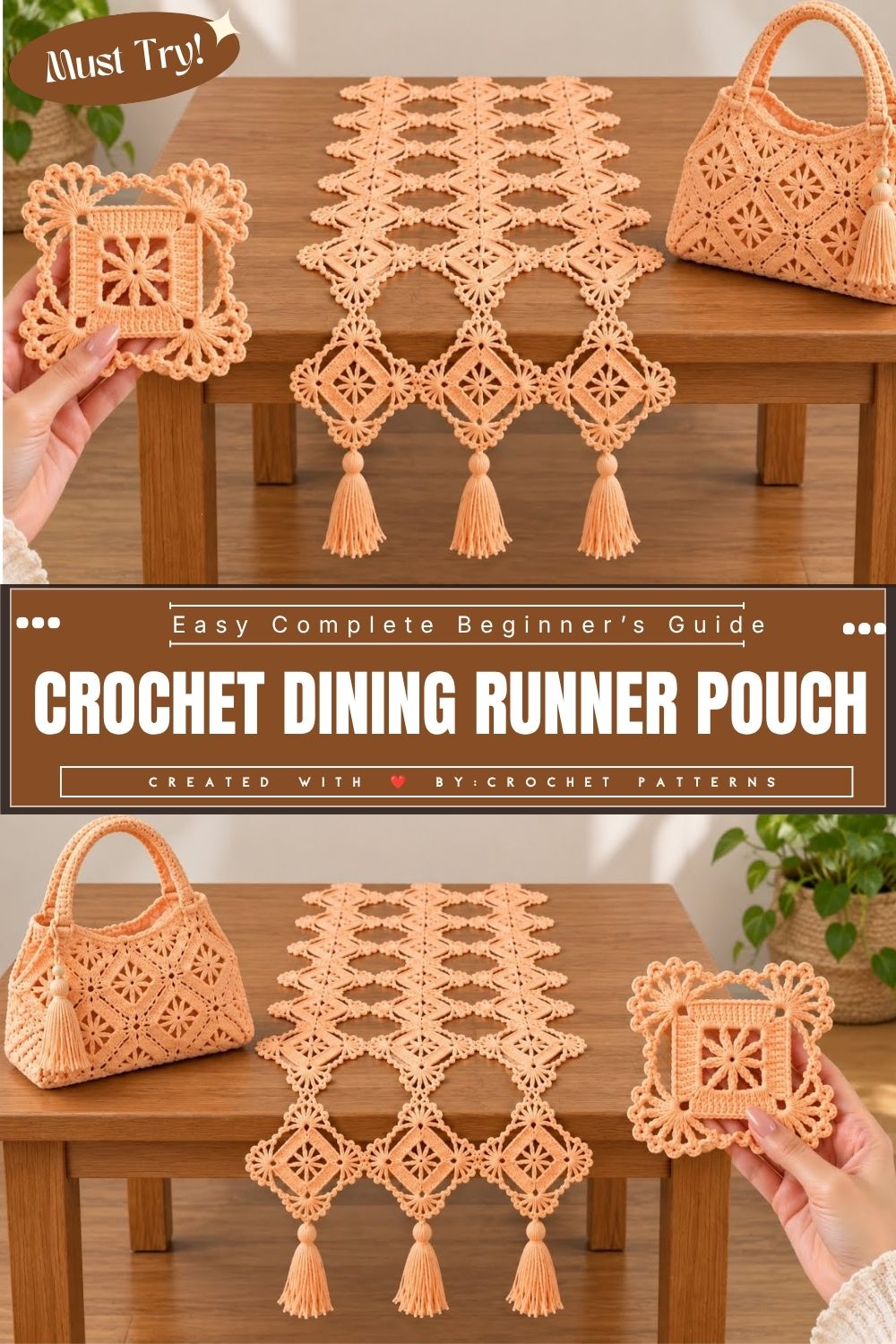
Orange cotton loops around two fingers, a hook slides through a snug ring, and eight tidy posts spin into a circle that’s the first minute of the Simple Crochet Dining Runner, Pouch & Coaster Pattern, a three-piece dining set built from one repeating flower-square motif that carries straight from coaster to runner to pouch.
Master one flower square and the whole dining set follows, with no unrelated stitch patterns to learn along the way. Squares finish most makers clear one quickly in under twenty minutes, and the picot edging that squares off each motif doubles as the runner’s border and the pouch’s seam line, so the set reads as one design rather than three stitched together.
Pattern Overview
- Table runner: a row of joined flower squares with a scalloped shell border, sized to fit a standard dining table and adjustable by formula
- Coaster set: individual flower squares, worked slightly denser for body, in a set of four or six.
- Drawstring pouch: two flower squares stacked and joined for the front, two for the back, seamed into a small drawstring bag
- Finished sizes: runner approximately 14 in wide x 36 in long (6 squares); coaster approximately 4 in x 4 in; pouch approximately 5 in wide x 7 in tall before the drawstring gather
Materials
- Worsted weight or DK-weight 100% cotton yarn (mercerized cotton gives the crispest picots) roughly 250 g for the full set in one color, more for multi-color coasters
- 3.5 mm hook for coasters (denser gauge), 4 mm hook for the runner and pouch squares
- Yarn needle for weaving ends and seaming
- Rustproof pins and a blocking mat or towel
- Optional: fabric or fusible interfacing cut to size for the pouch base, non-slip rug tape or silicone dots for the coaster backs, cotton cord for the drawstring
Abbreviations
Ch (chain), sl st (slip stitch), sc (single crochet), hdc (half double crochet), dc (double crochet), picot (ch 3, sl st in 3rd ch from hook), sp (space), st(s) (stitch(es)), rnd (round), rep (repeat)
Important Stitches
Four stitches carry the whole set: dc for the base round of every square, sc and hdc for the petals, dc clusters for the corner shells, and sl st for joining rounds and connecting squares as you go.
Before You Start
Work one test square first. Check it against a 4 in ruler edge to edge size up a hook if it’s small, size down half a step if it ripples. Measure the dining table so the runner formula below has a real number, and wet-test a scrap of variegated or dyed cotton for bleeding before it sits near a tablecloth.
Time Box
Full set: 6–8 hours. Coaster: 15–20 minutes each. Runner: 3–4 hours for six squares plus border. Pouch: 1.5–2 hours for squares, seaming, and drawstring. Blocking adds a few hands-off hours before assembly.
Construction: Table Runner
1. Foundation Round (Flower Square Motif)
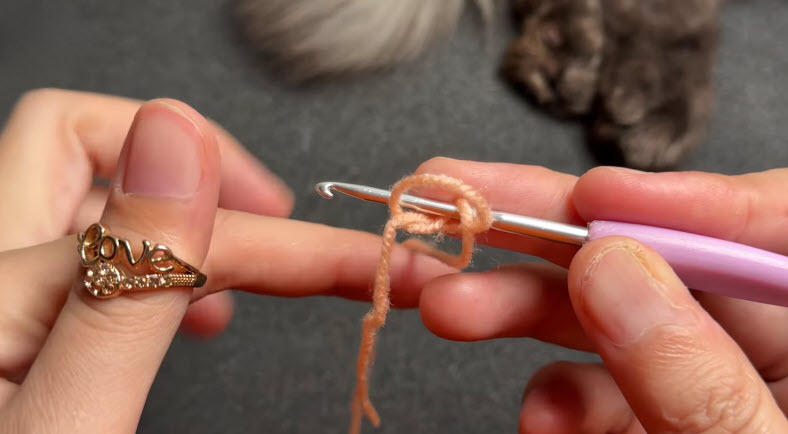
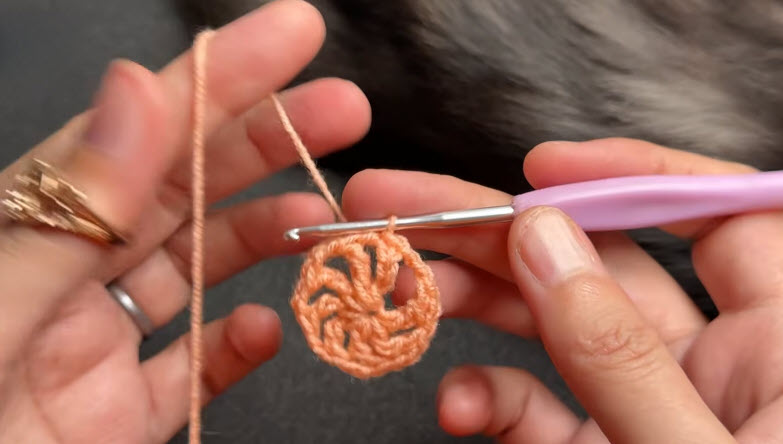
- Leaving a 6-inch tail, wrap the yarn twice around two fingers to form a ring, then work ch 3 (counts as first dc) and 15 dc into the ring — 16 dc total. Pull the tail to cinch the ring, then join with a sl st to the top of the ch-3.
- Mark the joining stitch so round 2 has a clear starting point
2. Building the Petals
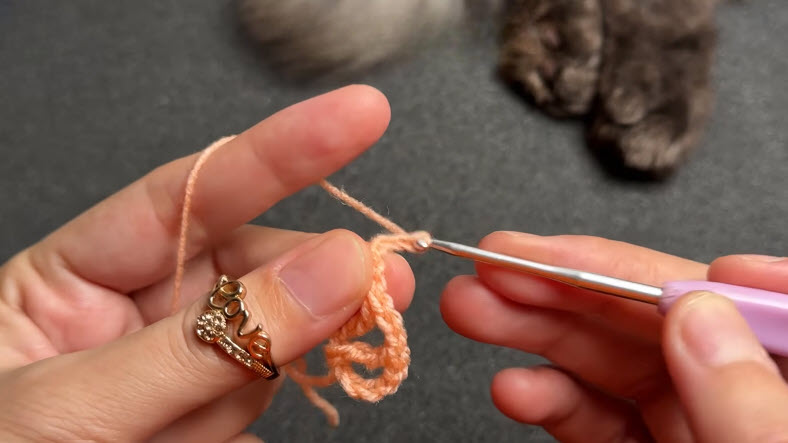
- Ch 1, then sc in next dc, ch 5 around all 16 sts, sl st to the first sc — 8 loops.
- Into each ch-5 loop, work (sc, hdc, 3 dc, hdc, sc) for eight matching petals; an uneven petal here or there is the fastest way to a lopsided square later.
3. Corner Shells and Squaring the Motif
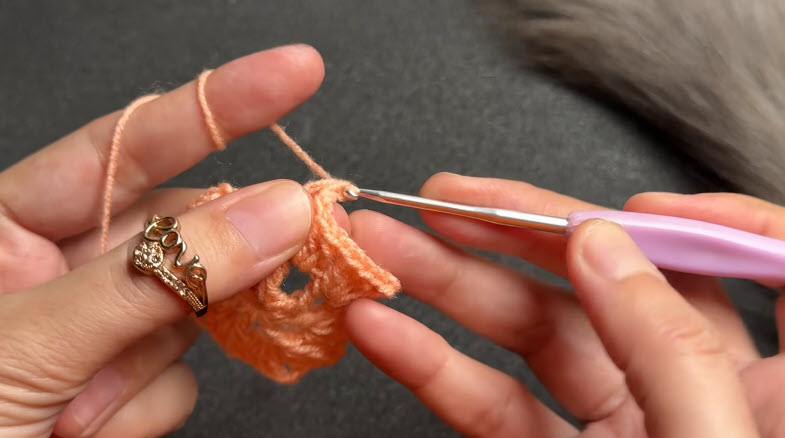
- Working behind the petals, sl st into a petal’s tip picot space and work (3 dc, ch 2, 3 dc) there for a corner shell, ch 1, sc between the next two petal tips, ch 1, repeat at four evenly spaced points to turn the round flower into a joinable square.
- Fasten off, leaving a tail long enough to join to the next square.
Pro-Tip: Count picot loops out loud as you close the fourth one on each side before starting the corner shell. An extra or missing picot in the petal round is invisible until the square refuses to sit flat next to its neighbor.
4. Joining Squares and Border
- Make six squares total and join them in a single row, working a join-as-you-go slip stitch through the corner ch-2 spaces on the final round of each new square.
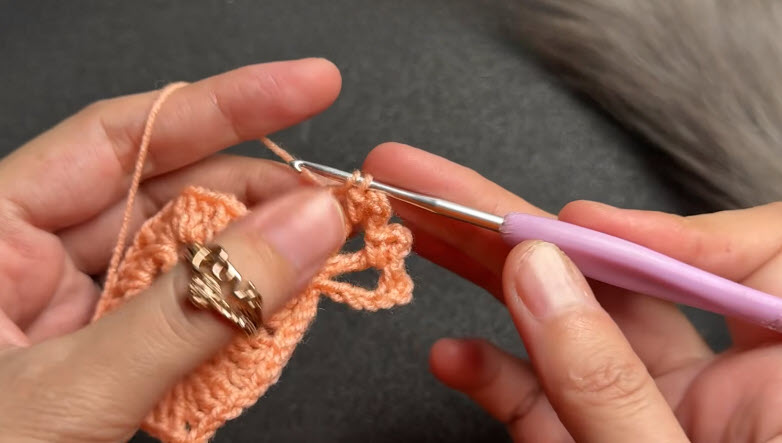
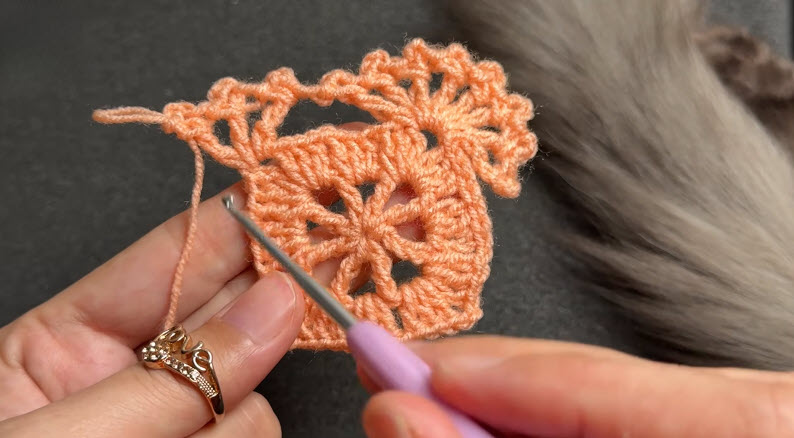
- Work one round of sc along both long edges of the joined strip, then a shell border of (sc, ch 2, 3 dc, ch 2, sc) spaced evenly along each edge to finish with the same lacy look as the squares.
Construction: Coasters
1. Foundation and Petals
- Repeat Steps 1–3 of the runner motif exactly, with the smaller 3.5 mm hook for a denser fabric that holds its shape under a warm mug.
2. Density Check
- Hold the finished coaster to a window or lamp. Small, even gaps of light are normal; wide patches mean the hook is too big drop a size, or hold a second strand with the main yarn for the next coaster.
3. Backing
- Once blocked, add non-slip rug tape or a few silicone dots to the back of each coaster so the set stays put with the mug.

Construction: Pouch
1. Front and Back Panels
- Work four flower squares. Join two along one edge (same join-as-you-go method as the runner) for the front panel, and repeat for the back each panel measures roughly 4 in wide x 8 in tall.
2. Seaming the Sides and Base
- Hold front and back together and sl st or whip-stitch through both layers along the sides and bottom, leaving the top open. Slide a same-size piece of interfacing between the layers at the base before closing the last stitches, so the bottom holds its shape once loaded.
3. Drawstring Eyelet Round
- Work one round of sc around the top opening, then dc, ch 1, skip 1 repeated evenly for the eyelets. Mark the center front and center back first so the eyelet count matches on both sides.
4. Drawstring
- Make two 30-inch chains of cotton cord or crochet chain and thread them through the eyelets from opposite starting points so both ends land together for cinching.
Assembly
The runner comes together as the squares are joined, so only weaving in tails is left. For the pouch, check both side seams sit at the same height before closing the base an uneven seam makes a finished pouch lean once it’s holding something.
Keeping Pieces Uniform
Set the first square aside as a reference and lay every new one on top of it before joining. A square running a stitch wide or narrow shows up immediately this way, long before it’s seamed in where unpicking is far more work.
Blocking & Shaping
Block every square before joining wet each piece, pin it into a true square on a towel, and let it dry fully. Blocking after joining stretches seamed pieces unevenly, which is exactly what produces a runner with a wavy edge on one side only.
Stitch Count Checkpoints
- After round 1: 16 dc
- After the petal round: 8 loops, 8 petals
- After the corner-shell round: 4 shells, 4 sc between shells
- Coaster and each runner/pouch square: same 4 in finished measurement before joining
Common Mistakes
Uneven picots between petals cause most lopsided squares. A missed corner shell throws off a runner’s join line. Skipping the coaster density check leaves a floppy set, and blocking after seaming produces edges no pressing fixes.
Troubleshooting
A square that won’t lie flat has an uneven petal round unravel to round 2 and recount. A gapping pouch base means the interfacing shifted; reopen the last inch and reset it centered. A rippled border means the shells were worked too tightly; loosen tension half a hook size for that round.
Size Modification
Divide the desired runner length by 6 in (one bordered square) for the number needed. Add a round of sc before the corner shells to size coasters up half an inch. Add a third row of squares per panel for a larger pouch.
Color Variations
One solid color reads as a coordinated set off the hook. For contrast, work each center round in one color and switch for the petals and border — a good way to use up leftover cotton.
Finishing
Weave tails through several stitches rather than trimming close, since picots pull loose more easily than solid rounds. Press the runner lightly, wrong side up, with a cotton-safe setting to flatten the border without crushing picots. Starch is optional but keeps coaster edges crisp.
Care Instructions
Hand wash in cool water and lay flat to dry. Mercerized cotton tolerates a gentle machine cycle in a mesh bag, but air drying keeps picots from felting. Press through a cloth rather than direct heat near them.
Personalization Ideas
Tasseled Corners
Add a small cotton tassel to each corner of the runner for a finished, boutique look.
Contrast Picot Edging
Work the final picot round in a single accent color while keeping the rest of the set neutral.
Monogram Tab
Crochet a small initial tab and stitch it to the pouch’s front seam for a personal touch.
Seasonal Colorway
Swap the cotton color to match a holiday table in deep red and green, or soft pastels for spring.
FAQs
Does this set need blocking?
Yes block every square flat before joining for a far more even assembly.
Can the runner be resized for a round table?
Yes, with a shorter row of squares centered on the table; the same joining and border method applies regardless of length.
Is this cotton machine washable?
Most mercerized cotton tolerates a gentle, cool machine cycle inside a mesh bag, though hand washing keeps picots crisp longer.
How much yarn does one coaster use?
Roughly 8–10 g of worsted or DK cotton, depending on hook size and tension.
Can leftover yarn from other projects finish this set?
Yes, the motif uses small amounts per square, a practical way to use up leftover cotton in coordinating colors.
Leftover Yarn Guide
Every piece in this set is built from the same small flower square, which makes it a natural home for leftover cotton. One coaster uses roughly 8–10 g, so a set of four often comes entirely from scraps that wouldn’t stretch to a full project elsewhere. For a scrappy runner, keep the center round one neutral shade across all six squares and let the petals and shells vary by whatever leftover color is on hand; the repeating shape keeps mismatched colors looking intentional.