Loving Crochet Granny Square Cherry Cardigan Pattern
Explore the Loving Crochet Granny Square Cherry Cardigan pattern, beginner-friendly, handmade charm, easy steps, customizable fit, and gift-worthy style for cozy layering across seasons.
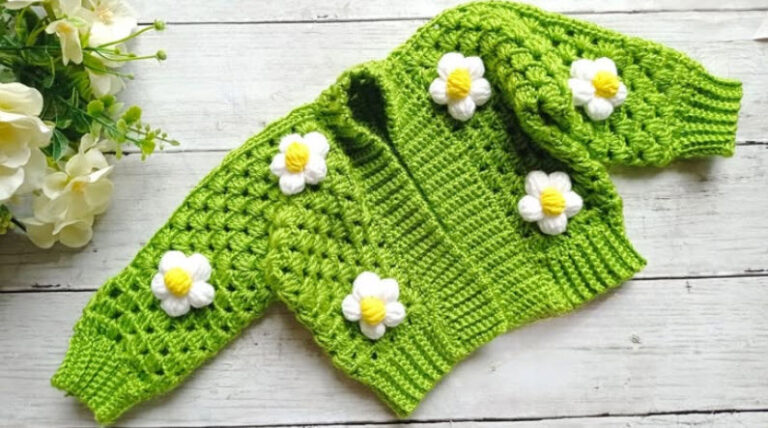
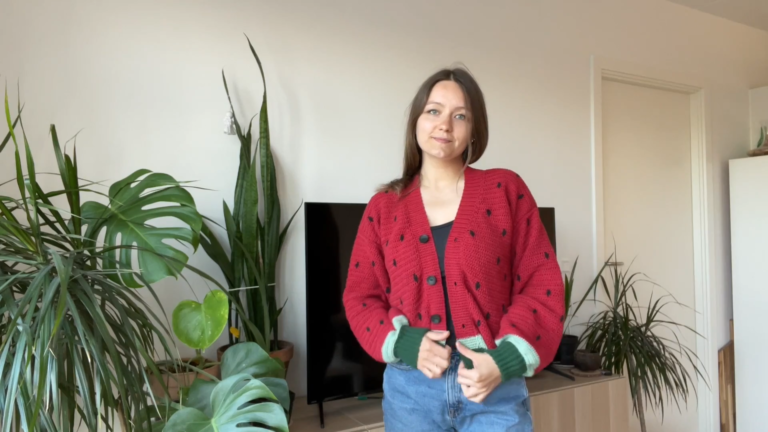
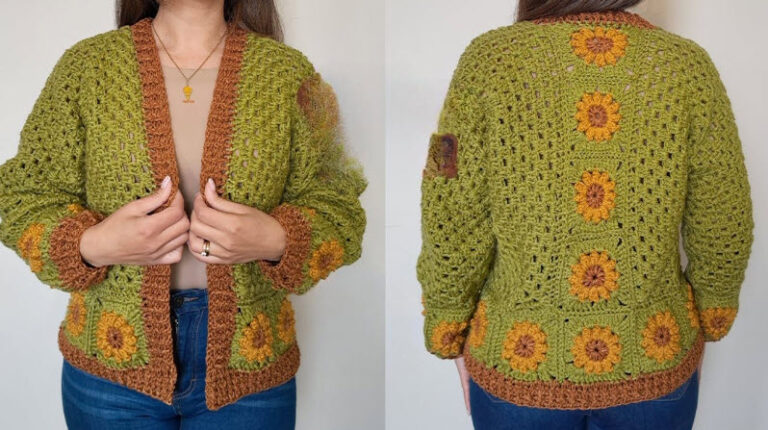
Fall in love with the Loving Crochet Granny Square Cherry Cardigan Pattern, a beginner-friendly project that turns classic squares into cheerful cherry motifs.


Playful pops of red, tidy leaves, and retro patchwork make it irresistibly cute, while modular squares keep stitching portable, customizable, and satisfying to assemble. Follow clear sizing notes to seam a cozy, lightweight cardigan you’ll wear year-round. Practical uses: layer over tees and dresses, style for festivals or picnics, and gift to a cherry-loving friend for birthdays or holidays.
Loving Crochet Granny Square Cherry Cardigan Pattern
Wearable and wonderfully whimsical, the Loving Crochet Granny Square Cherry Cardigan Pattern blends classic crochet charm with sweet cherry details. Moreover, the process is beginner-friendly, highly customizable, and soothingly modular, so you can make steady progress one step at a time. Additionally, the cherry puffs and embroidered stems add personality without complicated charts, while the simple shaping keeps the project approachable. Consequently, you’ll enjoy a relaxing makeup that results in a flattering, everyday layer. Finally, because the instructions are measurement-based with clear examples, you can size it for yourself or someone you love with confidence.
What You’ll Make
- A lightweight, paneled cardigan featuring:
- A cherry “puff” motif rrunsacross the body
- Simple double-crochet fabric for speed and drape
- Optional 1-inch center gap for a dainty tie-front
- Soft frilled hem and tidy single-crochet edging
- Straight or gently flared sleeves
- A beginner-first construction that looks boutique but stitches up simply
- A customizable piece that layers effortlessly over tees, tanks, and dresses
Materials Required
- Yarn (DK/Light-3 weight recommended for a soft drape)
- Main Color (MC): 750 m / 820 yd (approx. 350–380 g acrylic or cotton blend) for S/M
- Cherry Color (Red): 90 m / 100 yd (approx. 45–55 g)
- Stem Color (Green): 35 m / 38 yd (approx. 15–20 g)
- Optional accent (for pastel cherries or borders): 60 m / 66 yd
Tip: For sizes L–XL, add 150–250 m; for 2XL–3X, add 300–450 m to MC.
- Hooks
- 6.5 mm for all foundation chains (keeps edges flexible)
- 6.0 mm for body, sleeves, and frill
- 3.5 mm for slim, firm ties
- Notions
- Measuring tape
- Tapestry/embroidery needles (one blunt, one sharp)
- Scissors
- Stitch markers or clips
- Blocking tools (pins and a steamer or spray bottle)
- Example body measurements used in this guide (S/M)
- Final cardigan circumference at hem: 34 in (ease included; base waist 29 in)
- Back panel width: 17 in (half of 34 in)
- Front panel width (each): 7.5 in (with a 1 in total center gap)
- Total garment height: 17 in (including approx. 2 in frill)
- Fabric height before frill: 15 in
- Upper arm circumference: 13 in (comfortable fit)
- Sleeve length (shoulder to wrist): 19.5 in
- Example starting chains (S/M)
- Front panels (each): ch 26
- Back panel: ch 52
- Sleeves (each): ch 45
- Tie: ch 100 with 3.5 mm hook
Gauge and Sizing Strategy
- First, work a quick gauge swatch to ensure your fabric matches the plan. For DK yarn and a 6.0 mm hook, aim for approximately 12–13 dc stitches x 8–9 rows = 4 in x 4 in (10 cm x 10 cm).
- Next, select your ease. For a relaxed fit, add 4–6 in of ease to your body measurement at the level the cardigan will sit (waist, high hip, or bust).
- Then, compute widths. Back width = final circumference ÷ 2. Front panel width (each) = back width ÷ 2, minus 0.5 in per front if you want a 1 in tie-front gap.
- Additionally, set your desired length. Total length = shoulder to hem. Fabric height before frill = total length – frill height (plan 1.5–2.5 in).
- Finally, plan sleeves from your upper arm circumference and desired ease. If you like a slight flare, schedule gentle increases below the elbow.
Stitches and Techniques Used
- ch (chain)
- sc (single crochet) worked into the back bump for a neat foundation
- dc (double crochet)
- Puff-like “cherry” bobble (explained below)
- Mattress stitch for flat, invisible seams
- Simple embroidery for stems
Cherry Puff (bobble-style) basics:
- Insert hook into stitch, yo, pull up a loop to the height of a dc; yo, pull through two loops only. Repeat this “partial dc” 4 times in the same stitch (you’ll have multiple partial dc stacked). Then, yo and pull through all loops on the hook to close the puff. For color-change cherries, finish the final yarn-over with the main color to carry red invisibly.
Step-by-Step Instructions (with estimated making time)
Times are for a relaxed beginner pace using DK yarn. Because sizes vary, use these as planning estimates.
- Prep and Measure
Estimated time: 15–25 minutes
- Measure your body where the cardigan sits, then add ease for comfort. For example, 29 in base waist + 5 in ease = 34 in final circumference.
- Calculate panel widths: back = 17 in; fronts = 7.5 in ea, ch with a 1 in total gap.
- Determine panel height: shoulder to hem (17 in) minus frill (2 in) = 15 in of panel fabric.
- Record sleeve measurements: upper arm 13 in; sleeve length 19.5 in.
- Mark these numbers on a sticky note to reference while you crochet. Consequently, you’ll keep both panels consistent.
- Gauge Swatch
Estimated time: 20–30 minutes
- With 6.0 mm hook and MC, ch 18. Work dc rows for a 5 in square.
- Measure center 4 in: you want about 12–13 dc x 8–9 rows.
- If your swatch is larger, go down a hook size; if it’s smaller, go up a size. Therefore, your finished piece will align with the measurements provided.
- Front Panels (make two)
Estimated time: 2.5–4 hours each
- Foundation and base row: With 6.5 mm hook, ch 26. Switch to 6.0 mm, sc in the back bump of the 2nd ch from hook and across; ch 2, turn.
- Cherry puff row: Prepare red on a slipknot. Dc in first st (turning ch counts as dc). In the next st, work a 4-partial-dc puff with red; ch 1; skip 1; in the following st, make another red puff but finish the closing yo with MC. Place 1 dc between cherry pairs, then repeat: cherry, ch 1, skip 1, cherry (finish with MC), dc. Continue across and end with dc. Drop red and gently snug floats.
- Anchor row: Ch 1, turn, sc evenly across into each stitch and chain space.
- Body rows: Ch 2, turn, dc across for approximately 10 rows or until you’re near your planned length.
- Neckline shaping: On the center-front edge only, work dc2tog once each row to create a diagonal neckline. Continue shaping until you reach 15 in height (or your target).
- Stabilize: Work 1 last row of sc across; fasten off.
- Mirror the second front panel so decreases sit on opposite edges. Furthermore, clip the center-front edges with markers to avoid working the shaping on the wrong side.
- Back Panel
Estimated time: 3–5 hours
- Foundation: With 6.5 mm hook, ch 52. Switch to 6.0 mm, sc in back bumps; ch 2, turn.
- Cherry puff row: Repeat the cherry sequence used on the fronts across the width of the back.
- Anchor row: Ch 1, sc across through stitches and chain spaces.
- Body rows: Dc in rows until the back matches your front panel height before the final sc.
- Stabilize: Work a final sc row; fasten off. As a result, all three body pieces will line up neatly for seaming.
- Sleeves (make two)
Estimated time: 3–4.5 hours each
- Start straight: With a 6.5 mm hook, ch 45. Switch to 6.0 mm; sc back in the bumps; ch 2, turn.
- Build fabric: Dc across. Work 25 dc rows for a straight forearm section.
- Gentle flare: On the next row, place an increase (2 dc in one st) at the beginning, one at the center, and one at the end. Work the following row straight. Alternate “increase row” and “straight row” until you reach your sleeve length.
- Stabilize: Work a final sc row; leave a long tail for seaming.
- Try-on tip: Pause halfway, wrap the sleeve around your arm, and check comfort. If it feels snug, add an extra increase row; if it feels loose, skip the next increase. Consequently, your sleeve will fit the way you like.
- Block Your Pieces (optional but helpful)
Estimated time: 20–40 minutes active (plus drying)
- Lightly steam or spritz with water, then pin panels to the exact measurements you calculated.
- Smooth edges and corners. Additionally, coax the cherry row so puffs look plump and aligned.
- Allow pieces to dry flat before seaming to prevent distortion.
- Assembly and Seaming
Estimated time: 60–120 minutes
- Layout: Place the back panel right side up; align the front panels at the shoulders. Set sleeves so the wrist edges are at the bottom, and the sleeve seam will land under the arm.
- Shoulders: Mattress-stitch shoulder seams first. Catch the “bar” between edge stitches on both sides to keep seams flat.
- Sides: Mattress-stitch side seams from underarm down to hem, leaving armholes open.
- Sleeves: Seam sleeves from wrist to underarm. Then, set sleeves into armholes, matching the sleeve seam to the side seam.
- Weave in ends as you go. Therefore, your finishing at the end will be quick and tidy.
- Embroider the Cherry Stems
Estimated time: 45–90 minutes
- Thread green yarn on an embroidery needle. With the right side facing, bring the needle up at the top edge of a red puff.
- Stitch diagonally up to a point above the cherry; take a small bite of the fabric so the stitch anchors.
- Repeat from the opposite side to form a neat V. Then, reinforce each leg of the V once or twice for definition.
- Travel on the wrong side by slipping under theDCc fabric to the next cherry. Consequently, your carries will stay invisible.
- Frilled Hem
Estimated time: 45–90 minutes
- Join MC at the lower front edge. Ch 2; across the entire hem, work “1 dc in next st, 2 dc in next st” repeatedly to create a soft ruffle.
- Turn; ch 2; work one straight dc row with no increases.
- Repeat the two-row pattern until the frill reaches 1.5–2.5 in, ending on an increase row for a fuller wave.
- Fasten off and smooth the edge. As a result, the cardigan gains a playful, balanced finish.
- Front, Neckline, and Shoulder Edging
Estimated time: 30–60 minutes
- Attach the MC to the lower right front corner. Ch 1; sc evenly up the front edge, around the neckline and back neck, and down the opposite front.
- Keep tension even at curves to avoid ripples.
- Fasten off and weave in ends. Consequently, the edges will look crisp and professional.
- Make and Add the Ties
Estimated time: 10–15 minutes
- With a 3.5 mm hook, ch 100 for a slim, subtle cord.
- Weave the tie through the DC fabric near the start of the neckline, decreasing so it cinches naturally.
- Knot ends or add small tassels. Finally, tie a bow and admire the fit.
- Final Try-On and Adjustments
Estimated time: 10–20 minutes
- Put the cardigan on and check the drape. If you prefer more length, add another frill repeat.
- If the neckline feels loose, add one more sc edging pass. Alternatively, if it feels snug, lightly steam the edging and stretch it gently.
- Once satisfied, trim any stray ends. Consequently, your cardigan is ready to wear or gift.
Basic Tips for Success For (Crochet Granny Cardigan Pattern)
- Carry MC behind your red cherry puffs and close every second puff with MC; therefore, floats stay hidden, and tension remains even.
- Mark the center-front edges on both panels so that decreases always land on the correct side.
- Count rows on the fronts and back to guarantee equal heights before seaming.
- Steam-block from the wrong side, so the puffs keep their volume.
- Use mattress stitch for nearly invisible seams and a flexible finish.
- Switch to a smaller hook for ties to prevent slack loops and to achieve a sleek bow.
- Try on sleeves during the increase phase; slight changes early save time later.
Common Mistakes (and Easy Fixes)
- Visible red floats or uneven cherries: Finish every second cherry with MC and gently snug the red before the next stitch. If a float peeks, lift it with a needle from the wrong side and smooth it flat.
- Neckline shaping on the wrong edge: Label the center-front edge with two markers on each panel. Because you’ll see them immediately, you’ll be on the correct side every time.
- Hem ruffle too dramatic or too subtle: Adjust your increase frequency. For fewer waves, try “2 dc, then 2 dc in next st.” For more waves, try “(2 dc in next st) across.”
- Tight seams that pucker: Use a longer yarn tail and lighter tension when mattress stitching, then tighten every 2–3 in rather than after every stitch.
- Sleeves twisting at the armhole: Matchthe sleeve seam to the side seam and mark quarter points on both the sleeve and the armhole before stitching. Consequently, the distribution stays even.
Fun Variations You’ll Love
- Color play cherries: Swap red for blush pink, coral, or burgundy; add a pale green for stems to soften the look.
- Longer or cropped body: Add or remove dc rows before the frill, then adjust the frill to taste.
- Button band: Skip the tie, work 2–3 additional sc rows up the fronts for stability, and add simple buttonholes (ch-1, skip-1) spaced evenly.
- Extra froth: Increase in every stitch on the first frill row for a dramatic ruffle, then stabilize with one straight dc row.
- Minimalist edition: Omit the frill and work 2–3 sc rounds for a straight, tailored hem.
- Granny-square remix: Make 5–6 in solid granny squares in MC; appliqué red puffs at square centers; seam squares to your measured widths and heights; then continue with edging, frill, and ties. As a result, you’ll get a true granny-square silhouette with a cherry charm.
Care and Finishing For (Crochet Granny Cardigan Pattern)
- Weave in ends on the wrong side after each major section to avoid end overload at the finish.
- Handwash in cool water with a gentle detergent, or use a delicate cycle in a mesh bag if fiber allows.
- Roll in a towel to remove excess water; reshape and lay flat to dry.
- Store folded rather than hung to preserve the shoulders and maintain the drape.
- Refresh with a light steam before wearing. Consequently, stitches bloom, and cherries look defined.
Frequently Asked Questions
- How beginner-friendly is this?
Very beginner-friendly. Because the body is mostly dc with a single cherry row and the shaping is minimal, it’s an ideal first garment. - What if my yarn isn’t DK?
Use your chosen yarn with an appropriate hook to achieve the measurement goals. If you meet the widths and heights listed for your size, your cardigan will fit, regardless of strict stitch counts. - Can I add more cherry rows?
Absolutely. Additionally, you can place a second cherry row near the bust or sleeves for extra pop. Just repeat the puff sequence and anchor it with an sc row. - How long does the whole project take?
For S/M, many beginners finish in 12–20 hours across a few evenings. Naturally, larger sizes, extra ruffles, or more cherry rows add time.
SEO-Friendly Wrap-Up For (Crochet Granny Cardigan Pattern)
If you’re searching for a cute, cozy, and customizable make, the Loving Crochet Granny Square Cherry Cardigan Pattern checks every box. Moreover, the cherry puffs, tidy stems, and soft frill deliver a standout, handmade look without complicated shaping. Additionally, measurement-based panels ensure a confident fit from the start, while beginner-friendly stitches keep the process relaxing. Consequently, you’ll end up with a wardrobe favorite that layers beautifully and makes a thoughtful gift.