Crochet Table Runner And Bag Coaster Pattern Home Decor
Deep violet yarn opens into delicate lacy round motifs in the Crochet Table Runner and Bag Coaster Pattern Home Decor. Chain arches ring each circle, so the finished set keeps its shape wash after wash. Sideboards, dining tables, and gift baskets all welcome the soft openwork.
Few projects blend function and charm like a crochet table runner paired with matching coasters. What sets the pattern apart is its round, chain-arch construction, which grows an open, floral texture from a tiny ring. Because every round builds outward from the last, the design scales easily. Makers who love a lacy home accent or a handmade coaster set will find the rhythm relaxing and repeatable.

What You’ll Need
- Yarn: Purple mercerized cotton or a cotton-acrylic blend in medium (worsted) weight. Cotton holds crisp edges longer, while blends resist stretching.
- Hook: A 3.5 mm to 4 mm hook with a cushioned handle keeps long sessions comfortable.
- Notions: Stitch marker, sharp scissors, tapestry needle, and a measuring tape.
- Finishing gear: Rust-proof pins and a foam blocking board for setting the lace.
- Gauge note: Tension matters more than an exact number. Stitch one test motif first, then adjust the hook size until the arches sit open without gaping.
Time Needed
A crochet table runner grows in relaxed stages, so plan the hours in blocks.
- Prep: 10 to 15 minutes for winding yarn and testing tension.
- Stitching: About 30 to 40 minutes per coaster-size motif. A full-length runner takes several evenings.
- Finishing: Roughly 30 minutes for weaving ends and blocking.
Step-by-Step Process
Step 1: Start With a Steady Hold
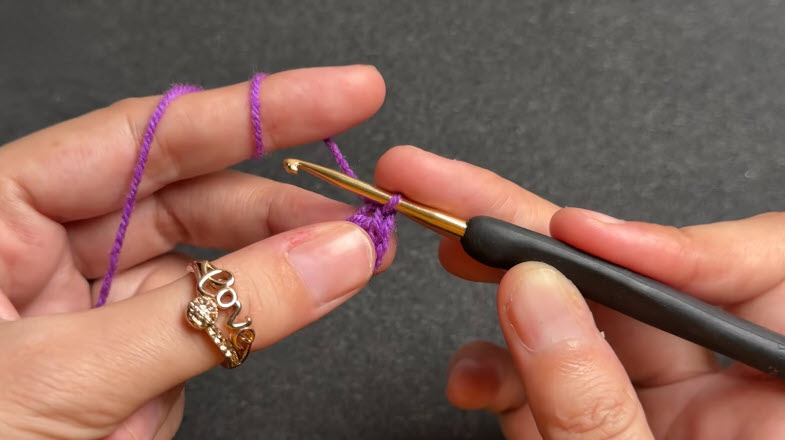
First, drape the purple yarn over the index finger of the non-hook hand. That placement controls tension from the first loop. Next, pinch the tiny starting loops between thumb and middle finger. Then slide the hook into the beginning ring and pull up the first stitch of the round.
Step 2: Close Up the Center Disc
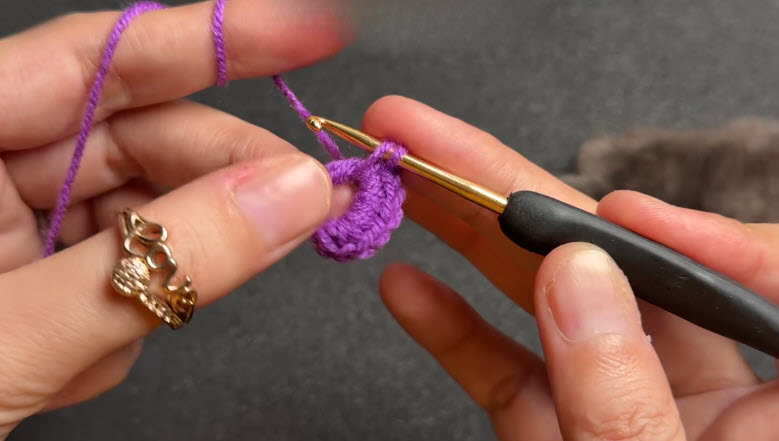
Now, work the first round snugly around the starting ring. Stitches should sit shoulder to shoulder until a small, dense circle forms. Afterward, leave the hook resting at the top of the final stitch, ready to lead into the next round.
Step 3: Stretch Out the First Chain Arches
Here the lace begins. Chain a loop of controlled length and anchor it back to the dense circle. Repeating the move fans open arches outward from the center. Meanwhile, keep the yarn draped over the finger so every chain stays consistent.
Pro-Tip: Compare each new arch with the first one. Matching lengths keep the circle flat and prevent ripples later.
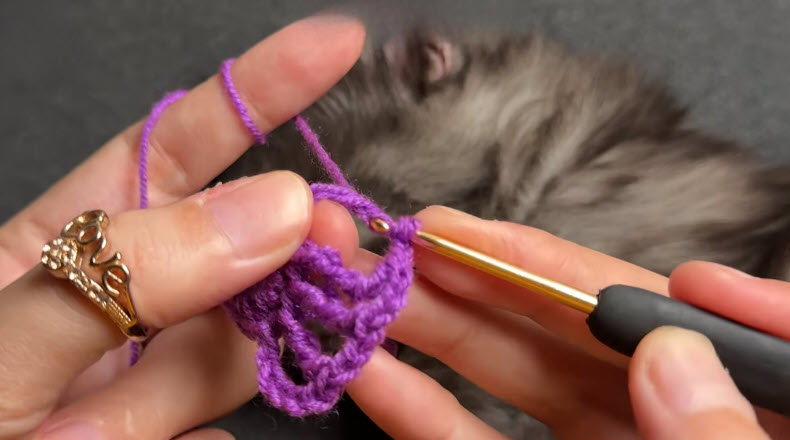
Step 4: Widen the Circle
Next, continue around and attach each new arch to the round below. Gradually, the motif grows into a wider disc, with a ring of open spaces around the solid center. At that point, the fabric should lie flat without curling.
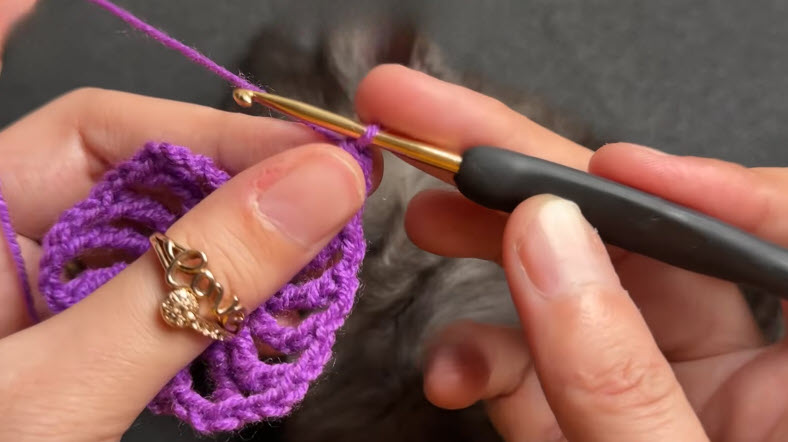
Step 5: Shape the Outer Petals
Finally, add a larger round of chain arches over the previous ones. Each arch swings wider and creates scalloped, petal-like edges. Stay relaxed while pulling up loops, because tight yarn pinches the lace and drags the circle out of shape.
Pro-Tip: Pin the finished motif into a true circle while damp. Blocking locks every arch at an even size.
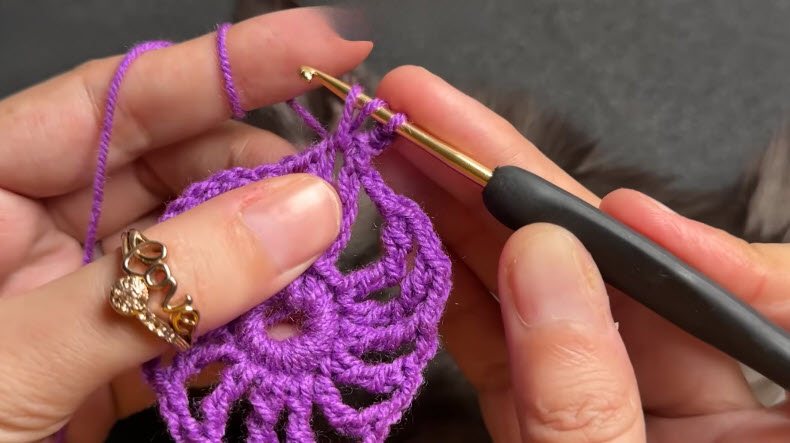
Common Mistakes and Their Fixes
- Problem: The center curls upward like a bowl.
- Fix: Check the previous round for skipped stitches, then loosen the grip on the yarn.
- Problem: Arches vary in size around the motif.
- Fix: Measure the first arch against a fingertip and match every later arch to it.
- Problem: The hook struggles to enter tight loops.
- Fix: Lift the working loop a little higher before chaining. If tension stays tight, move up half a hook size.
- Problem: Edges ripple after several rounds.
- Fix: Steam-block the lace flat, then compare arch lengths on the next motif.
Troubleshooting Guide
Problems can surface weeks after finishing. Fortunately, most have quick remedies.
- Shape not holding: Wet-block the piece, pin each arch evenly, and dry it flat. A light fabric-stiffener spray adds lasting body.
- Colors fading unevenly: Move the runner away from window light, and rotate its position monthly.
- Parts loosening: Rethread loose tails through several stitches in opposite directions, then trim close.
- Arches stretching: Steam lightly and reshape by hand before the fibers set.
Washing and Cleaning Instructions
Hand-wash only. Fill a basin with cool to lukewarm water, roughly 30°C (86°F), and add a mild detergent. Next, press the fabric under the surface and let it soak for ten minutes. Then squeeze gently, never wring or twist, because wringing distorts the arches. Roll the piece in a towel, reshape it, and dry it flat. Also avoid bleach, hot dryers, and direct sun, which fade purple dye and weaken fibers.
Storage Tips
Lay the clean, fully dry piece flat between sheets of acid-free tissue, or roll it loosely around a cardboard tube. Then place it in a breathable cotton bag inside a drawer. Avoid plastic bins, because trapped moisture causes yellowing, and skip hanging, since gravity stretches the lace. Refold along new lines every season to prevent permanent creases.
Signs of Wear to Watch For
Early checks extend the life of every motif.
- Fuzzy pilling on arches: Trim gently with a fabric shaver. Repair only if the fibers begin to thin.
- One thinning or snapped chain: Repair it by threading matching yarn through the neighboring stitches.
- Loose seams or joins: Re-sew them right away, since gaps widen quickly.
- Persistent yellow or brown staining, or brittle yarn: Replace the affected coaster or motif instead of the whole set.
- Stretch that steam-blocking cannot reverse: Replace that component and keep the others.
Creative Projects You Can Make With the Pattern
Round lace motifs adapt to many small builds. Readers who love the style can explore crochet doily patterns, a lacy placemat set, or a round cushion cover pattern. A larger version can line a bread basket or cushion a centerpiece vase. In addition, a single motif stitched onto a canvas tote adds a handmade patch. For presents, browse housewarming crochet gift ideas and bundle two coasters with a mini runner.
Ways to Style or Display It
Drape the crochet table runner down the center of a dining table, with a lamp or bud vase at each end. Meanwhile, stack the coasters on a tray for a coffee-table vignette. Against a cream or gray tablecloth, the purple lace stands out sharply. Alternatively, frame a single motif in a shadow box for a wall accent. Keep every piece away from candle flames and window glare.
Bonus: Color Pairing Ideas for Violet Yarn
Violet looks rich beside cream, soft gray, or sage green. For a bolder mood, add mustard accents. Meanwhile, buy yarn from a single dye lot so the runner and coasters match and any fading stays even.
Who Will Love the Pattern
Confident beginners who know chains and basic stitches can follow the round-by-round photos with ease. Likewise, intermediate makers who enjoy lace texture will appreciate the relaxed rhythm. Gift crafters, market sellers, and anyone refreshing a dining space also benefit, because the pieces stay lightweight and wash without fuss.
Why It’s Popular Right Now
Handmade lace accents fit today’s cozy, textured interiors. Makers and buyers alike want decor with a story, and small projects deliver quick wins.
- Textured decor trend: Open lace adds depth without clutter.
- Gift-friendly sets: A runner plus coasters wraps up as a complete present.
- Durable results: Cotton and careful blocking give pieces a long, useful life.
FAQ
Which yarn keeps the lace shape longest?
Mercerized cotton holds crisp arches best. Blends with a small acrylic share resist stretching, so both work well. Loosely spun, fluffy fibers sag after washing.
How often should the piece be washed?
Wash only when stains or dust appear. Frequent washing wears fibers faster, so shake out dust and spot-clean small marks between full baths.
Can beginners handle the lace arches?
Yes, if chains and basic stitches feel comfortable. Stitching one test motif with the photos above builds confidence before starting the full runner.

To Wrap Up
A well-tensioned crochet table runner paired with matching coasters brings quiet color and lasting texture to any room. Careful blocking, gentle washing, and smart storage keep every arch crisp for years. May each round bring calm evenings, and may the finished set earn a happy spot on the table.