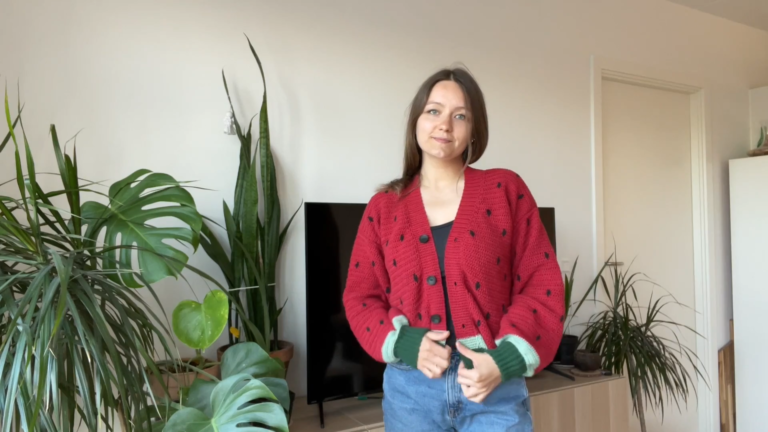
Crochet Granny Hexagon Cardigan Pattern for baby
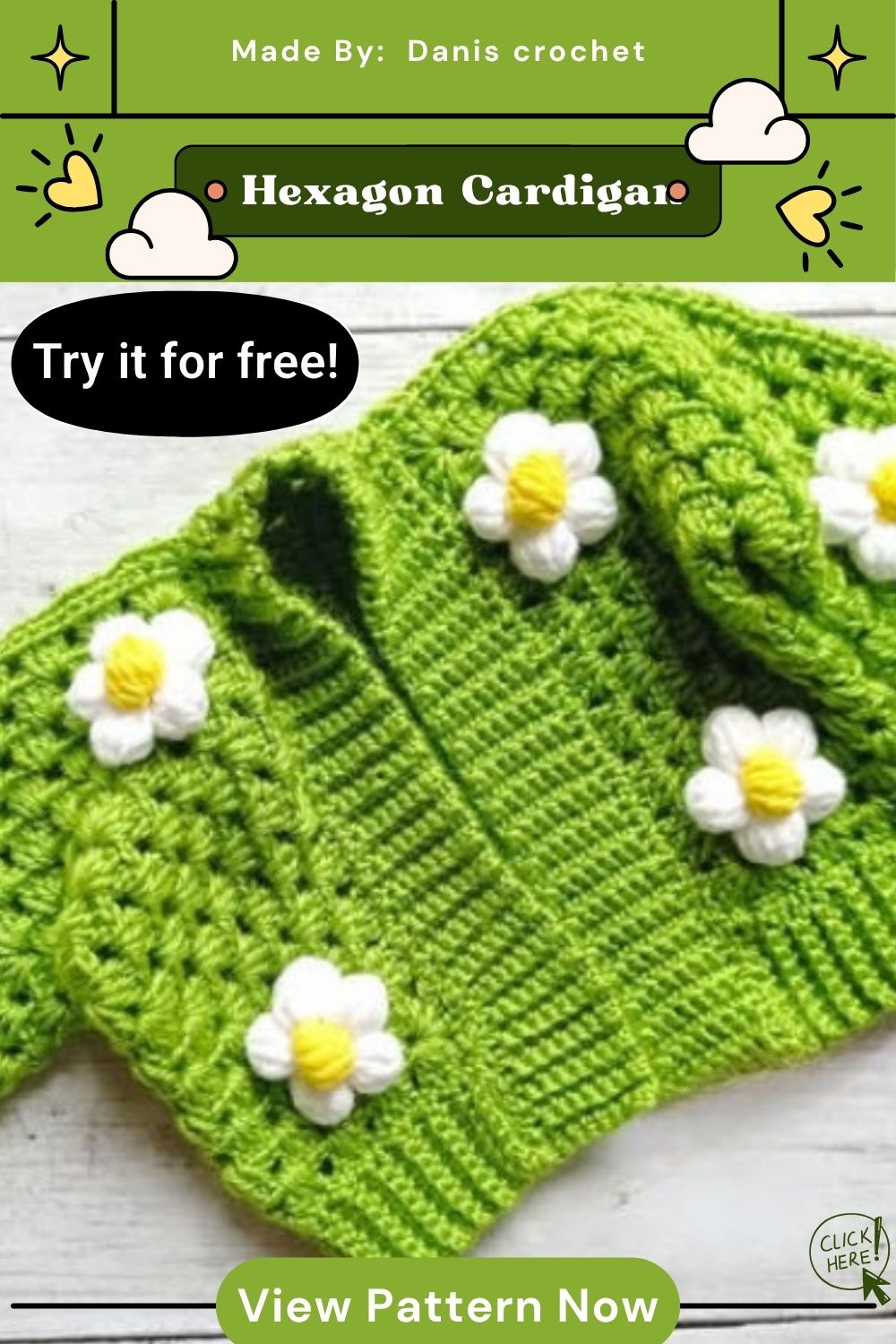
Loops of green yarn spiral into a tidy six-sided bloom at the start of this Crochet Granny Hexagon Cardigan Pattern for Baby, a motif-based garment built one small panel at a time. Soft clusters stack into a textured fabric that keeps an infant warm without feeling bulky or stiff.
Working a garment from joined motifs rather than one continuous piece changes how the project fits into a busy week, since a single hexagon granny motif finishes in a short sitting and travels easily between errands. Clusters of double crochet build a lofty, breathable fabric suited to a baby crochet jacket meant for spring or fall, and a shell-edge trim tucks raw motif seams out of sight along every border. The construction method also gives newer crocheters a low-pressure way to practice shaping before committing to a full sweater body.

What You’ll Need
A worsted or DK weight cotton-acrylic blend yarn works well for this project, since it holds stitch definition while staying soft against a baby’s skin. Pair it with a 4.0mm (G/6) hook for worsted weight, or drop to a 3.5mm hook if a DK yarn is chosen instead. Round out the kit with a tapestry needle for weaving ends, locking stitch markers for tracking rounds, sharp scissors, a flexible measuring tape, and two to four small buttons if a button band gets added at the end.
Skills You’ll Use
The pattern leans on a handful of core techniques: starting a motif with a magic ring, working three-double-crochet clusters into chain spaces, building corner increases that shape the hexagon, joining finished motifs into a panel, and finishing the edge with a shell or picot border. Blocking each motif to a matching size before joining keeps the panel lying flat once assembled.
What You’ll Learn
- Hexagon Motif Construction – shaping a six-sided granny motif through corner increases worked round after round.
- Join-As-You-Go Assembly – connecting finished motifs into a single panel without a separate seaming pass.
- Shell Edge Finishing – framing a motif panel with a scalloped border that hides raw edges.
Time Needed
Prep work, including swatching and gathering materials, takes roughly 10 to 15 minutes. Stitching a full set of motifs for one panel runs about two to three hours, depending on baby size and how many hexagons the layout calls for. Joining, edging, and weaving in ends adds another 30 to 45 minutes per panel. Altogether, a finished granny hexagon cardigan takes around six to eight hours of active stitching, spread comfortably across several sessions.
Step-by-Step Process
Step 1 – Start the ring.
Wrap the yarn around two fingers and pull the working strand through with the hook, forming a loop that will anchor the first round of stitches.
–
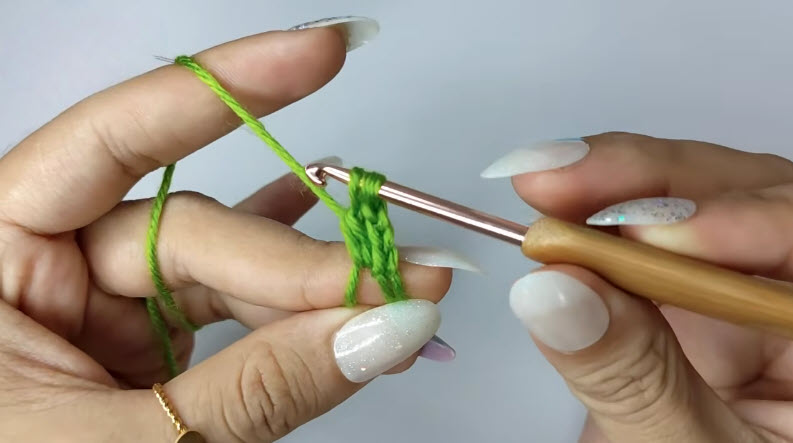
Step 2 – Build the first cluster.
Draw up a stitch inside the loop and chain to set the base for the first double-crochet cluster, keeping tension even so the center stays tight.
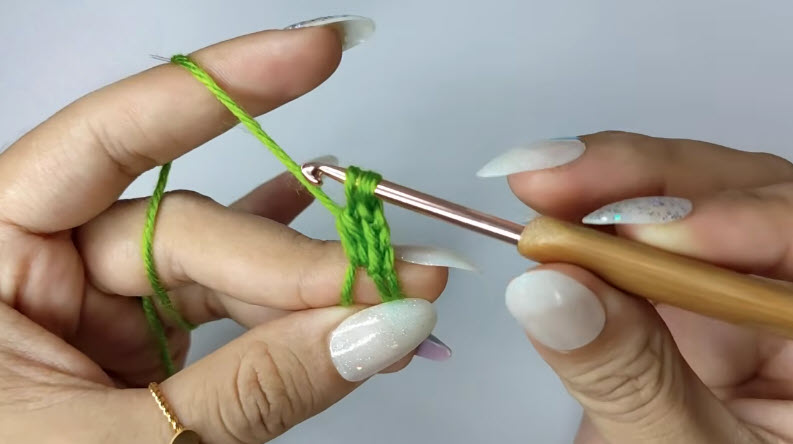
Step 3 – Complete the hexagon motif.
Continue working clusters and chain spaces around the ring until six sides emerge, then fasten off to reveal a finished granny hexagon motif ready for joining.
Pro tip: Block every motif to the same width before joining. Even a quarter-inch difference between hexagons shows up as a wavy edge once the panel is assembled.
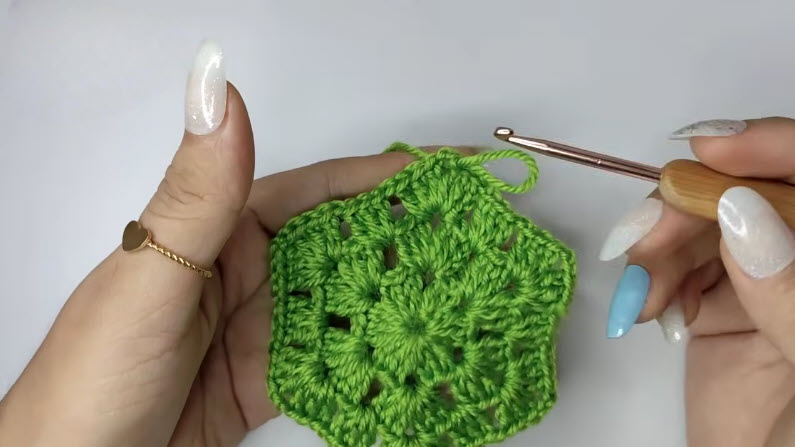
Step 4 – Join motifs into a panel.
Whip stitch or single crochet across matching sides to connect motifs into a wider strip, building toward the panel dimensions needed for a baby-sized cardigan front or back.
Stitch check: Count the stitches along one joined seam and compare it against the next before moving forward, since a mismatched seam pulls the whole panel off-square.
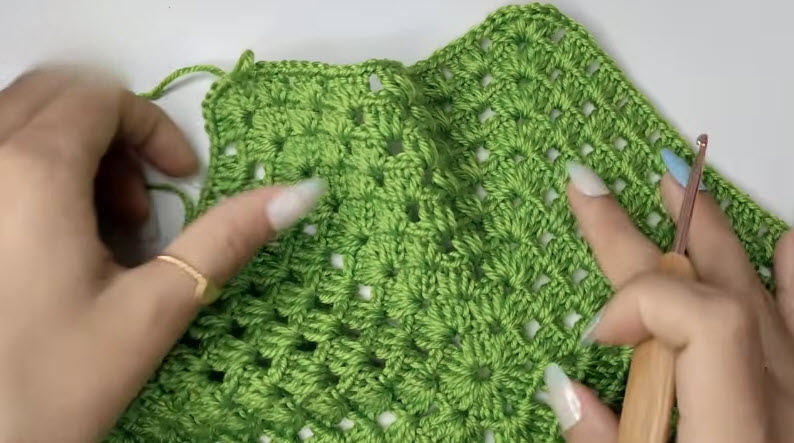
Step 5 – Begin the edging round
. Work single crochet evenly along the outer border of the joined panel, tucking in any loose tails as the round progresses to keep the back of the work tidy.
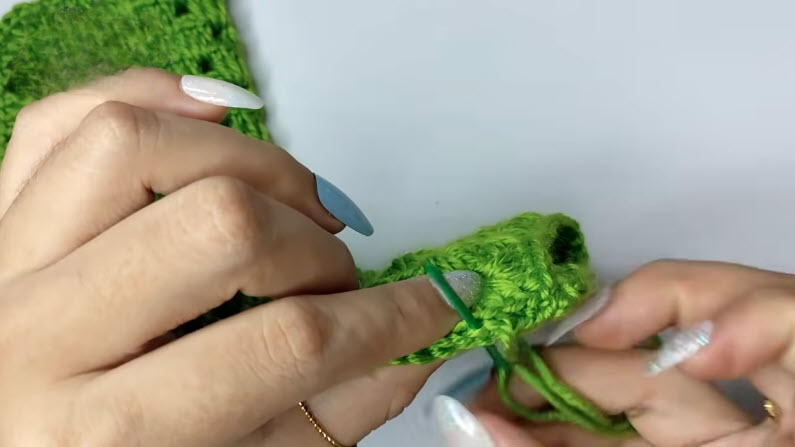
Step 6 – Finish the shell border.
Alternate skipped stitches with shell clusters along the edge, letting the scalloped texture build across the full width of the panel.
Fit check: Hold the finished panel against the intended chest or sleeve measurement before repeating the process for matching pieces, so every panel comes out proportional to the others.
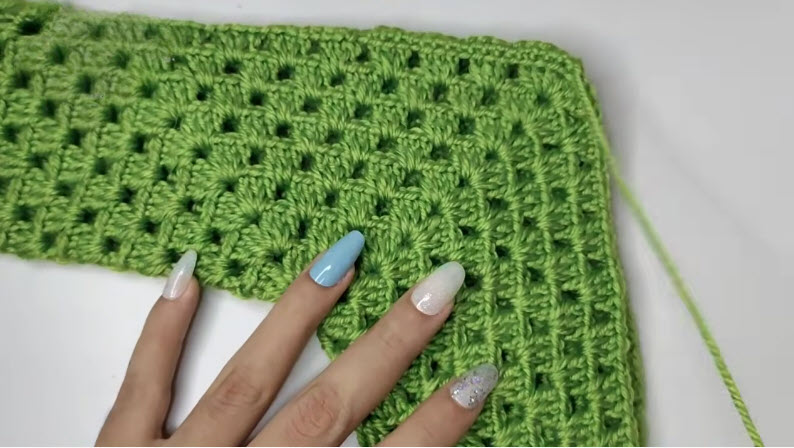
Step 7 – Review the completed panel.
Lay the finished piece flat to confirm the edge sits smooth and even, then set it aside as a matching piece takes shape.
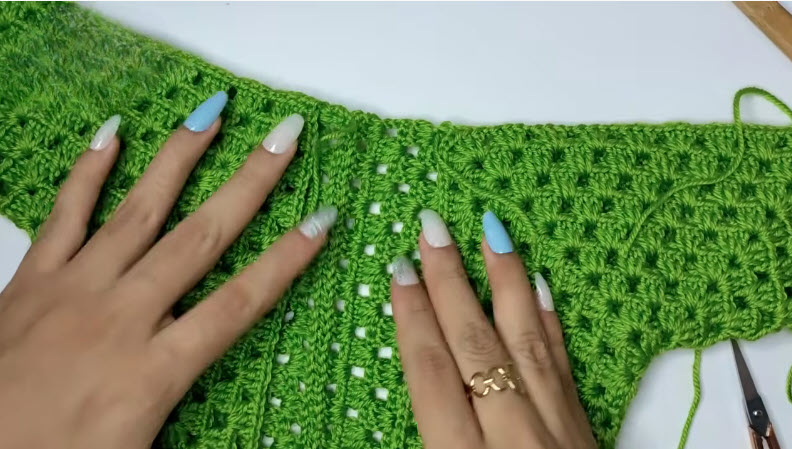
Where People Go Wrong
Tension often drifts partway through a project, leaving early hexagons smaller than later ones. Skipping a blocking step before joining is another common slip, since unblocked motifs rarely line up cleanly. Crafters sometimes also miscount how many hexagons a panel needs, which throws off the finished garment size once pieces are seamed together.
How to Fix Common Issues
Uneven tension corrects itself with a quick swatch check every few motifs, comparing width against a ruler rather than guessing by eye. Blocking with pins and a light steam pass evens out stubborn edges before joining begins. Miscounted panels can be salvaged by adding or removing a single hexagon at a seam rather than reworking the entire piece from scratch.
Finishing and Assembly Tips
Seam shoulder joins first, since that anchor point keeps the rest of the garment from shifting while the side seams come together. Weave loose ends directly into the seam allowance rather than the visible face of the fabric, and fasten each tail with a couple of backstitches for security. Attach a button band along the front edge last, once the body shape is fully assembled and holding steady.
Creative Projects You Can Make With This Pattern
A single hexagon motif scales down neatly as an appliqué on baby headbands or bonnets, adding texture without extra bulk. Several joined together make a soft embellishment for the front pocket of a tote bag, and a strip of them works nicely as a decorative border on a baby blanket. Crafters chasing a matching set often repeat the same motif at a smaller scale for coasters or nursery wall hangings.
Ways to Style or Display It
Layer the finished cardigan over a plain onesie for texture without overwhelming a small frame. Pair it with a coordinating bonnet or booties made from leftover yarn for a matching set. A folded cardigan also displays well on a nursery shelf, showing off the hexagon texture as a decorative piece between wears.
Who This Pattern Is Great For
Crafters who already know basic granny stitch but want practice with shaping and joining will find plenty to work through here. The motif-based structure also suits anyone who prefers portable projects, since a single hexagon travels well in a small bag. Gift-makers preparing for a baby shower often gravitate toward the pattern for its handmade, heirloom feel.
Smart Variations to Try
Swap worsted weight for fingering yarn to scale the entire granny hexagon cardigan down for a newborn size, adjusting hook size to match. Color-blocking each motif in a rotating palette adds visual rhythm without changing the stitch pattern itself. Adding or removing rows of hexagons resizes the garment for toddlers, while a hood or button band changes the overall silhouette.
Why It’s Popular Right Now
Motif-based garments have picked up momentum again as crafters look for portable, bite-sized projects that still build into something wearable. A few threads explain the renewed interest:
- Modular construction fits into short pockets of free time rather than requiring long uninterrupted sessions.
- Textured granny stitch patterns continue trending across handmade baby gift searches.
- Nostalgic granny-square styling pairs well with the current demand for heirloom-quality baby items.
FAQ
What yarn weight works best for this pattern?
DK or worsted weight yarn gives the clearest stitch definition while staying soft enough for baby skin.
How many motifs does a baby cardigan panel need?
Motif count depends on the target size. Measure the intended panel against the baby’s chest and torso length before joining. This gives the most reliable motif count.
Can the pattern be resized for a toddler?
Adding extra rows of hexagons, or switching to a heavier yarn and larger hook, both scale the garment up without changing the core construction.
How can motifs stay consistent in size across a full panel?
Blocking each motif to a matching measurement before joining keeps the whole panel flat and even.
Conclusion
Building a granny hexagon cardigan one motif at a time turns a full garment project into a series of manageable steps. Careful blocking, even joins, and a tidy shell edge have the biggest impact on the finished look. The modular structure also leaves plenty of room to size up, swap colors, or reuse the motif elsewhere.