Free Crochet Blue Table Runner Bag Coaster Pattern
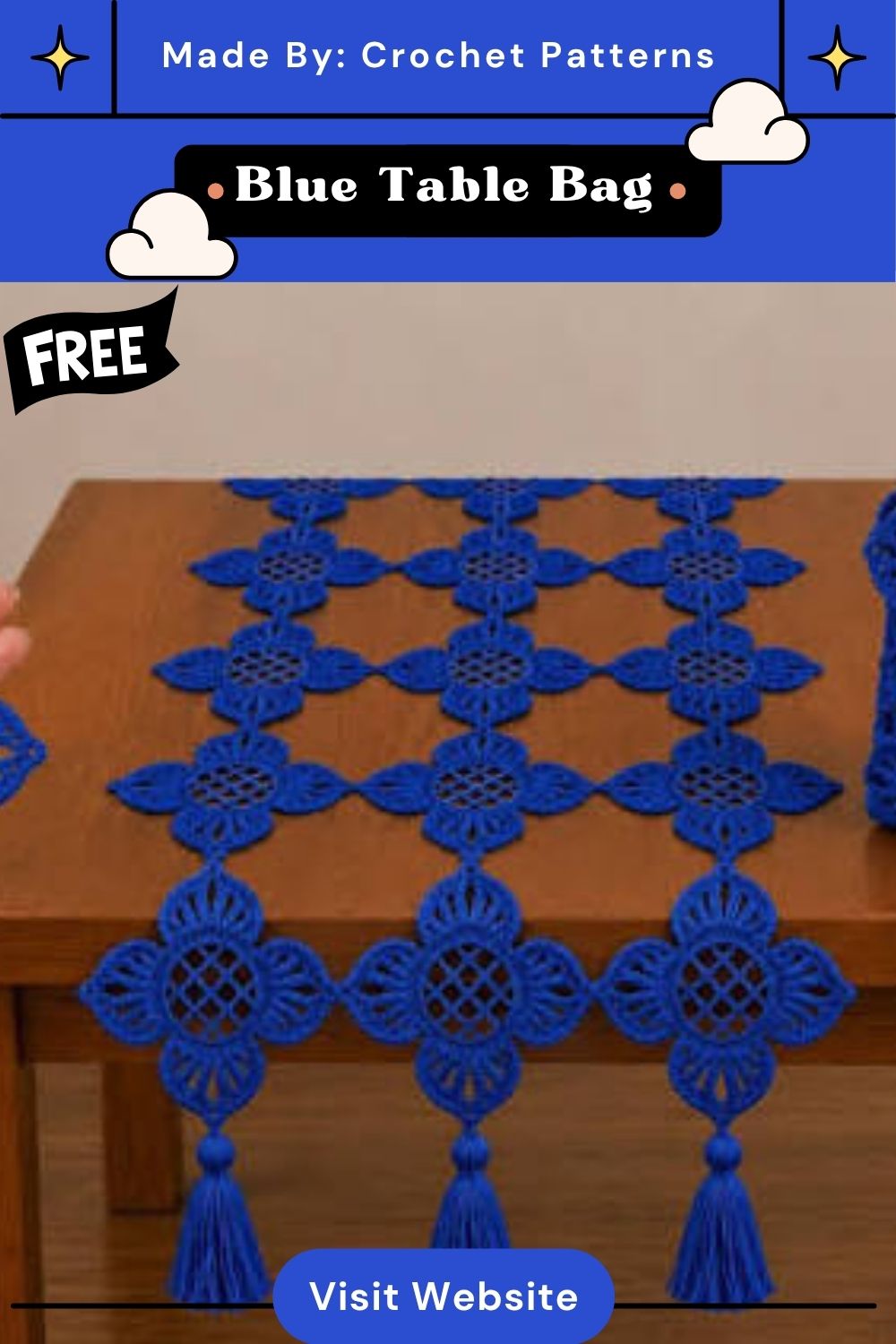
Hands guide soft blue yarn around a hook again and again as this Free Crochet Blue Table Runner Bag Coaster Pattern takes shape, petal by petal. Four textured clusters bloom around an open lattice motif, ready to become a coaster, a bag panel, or a table runner strip.
This design stands out for its versatility. Stitched once, the same crochet flower motif becomes a single coaster; stitched in a row, it becomes a table runner; sewn onto a base panel, it reinforces a tote embellishment. Built from a simple foundation ring, four clustered petals, and an airy trellis centre, the motif stays lightweight yet sturdy enough for daily use, giving crocheters one pattern that solves several practical needs around the house.

What You’ll Need
Gather approximately 100 grams of medium-weight cotton yarn in blue, a sturdy fiber that holds its shape for coasters and runners alike. Pair it with a 3.5mm hook, since a slightly snug hook measurement keeps the lattice stitches firm rather than floppy. Round out the supplies list with a tapestry needle for weaving ends, sharp scissors, a stitch marker, and blocking pins if the finished piece will be pressed flat. For anyone stitching this blue table runner bag coaster pattern as a longer runner, plan on extra yardage, since each motif repeats across the length.
Skills You’ll Use
Several core techniques come together in this design. Foundation rings and chain spaces build the open lattice, while petal clusters call on multiple stitches worked into a single point for texture. Slip stitch joins connect the rounds neatly, and simple color changes come into play for anyone stitching multiple motifs in coordinating shades. Tension control matters most here, since uneven stitches distort the trellis pattern quickly.
What You’ll Learn
- How to build a clustered petal from a single foundation ring
- How to keep an open lattice section even and symmetrical
- How to join multiple motifs into a runner or a bag panel
Time Needed
A single motif comes together fairly quickly. Budget about 10 minutes for the foundation ring and first petal, another 20 minutes for the remaining three petals and lattice bars, and 5 minutes for fastening off and weaving in ends. Altogether, one coaster-sized motif takes roughly 35 minutes, while a full table runner naturally takes longer depending on how many motifs get joined together.
Step-by-Step Process
Step 1: Start the Foundation Loop
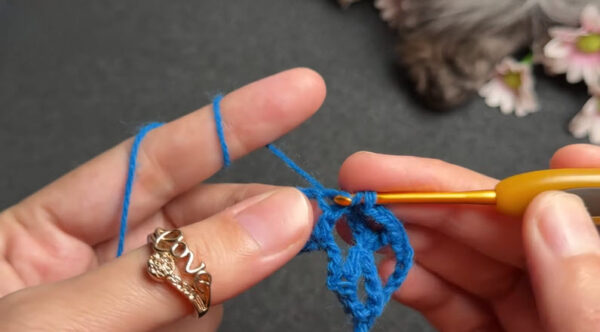
Wrap the blue yarn around the hook and secure the very first loop between your finger and thumb. Every motif in this blue table runner bag coaster pattern begins from this same starting point, so getting the tension right here saves adjustments later.

Step 2: Chain and Form the Ring
Chain several stitches, then guide the working yarn back through the first chain to close the loop into a small ring. That ring becomes the anchor point every petal builds from, so keep it snug rather than loose.

Step 3: Anchor the First Petal
Work the opening stitches of petal one directly into the ring, settling the base snugly against the chain. A firm anchor here keeps the cluster from shifting as more stitches get added.

Step 4: Shape the Petal Cluster
Continue stacking stitches into that same ring space until the first petal rounds out into its full, textured shape. Slide the loop off the hook briefly to check the form before moving forward.

Step 5: Chain Across to the Next Point
Chain again to bridge toward the next petal position. That chain segment doubles as the first strand of the motif’s open lattice center, so count carefully to keep the spacing even.
Step 6: Repeat Around to Complete the Flower
Repeat the petal-and-chain sequence around the ring until four petals sit evenly spaced. Fasten off and weave in the tail to reveal the finished motif with its airy trellis heart.

Where People Go Wrong
Petals frequently turn out lopsided when stitches get worked too loosely into the ring, leaving gaps between the cluster and the base chain. Tension also drifts as crocheters move from petal to petal, so later petals sometimes puff up larger than the first. A third common slip happens at the ring closure, where a loose join lets the whole center stretch out of shape once the motif meets steam or a block.
How to Fix Common Issues
Tighten a loose ring by pulling the tail end before working the first stitch, which locks the foundation before any petals get added. When petals vary in size, count stitches carefully rather than eyeballing the cluster, since a consistent running total keeps every petal matching. Switching to a smaller hook briefly, then back again, often corrects a motif that has grown looser than the others in a batch.
Finishing and Assembly Tips
Weave every yarn tail through several stitches on the wrong side before trimming, since a secure end matters more once these motifs get handled daily as coasters. Block each piece lightly with steam or a damp cloth, pinning the petals flat so the lattice center sits open and even. For a runner, whip stitch motifs together along matching petal tips, keeping tension consistent so the finished strip lies flat rather than rippling.
Creative Projects You Can Make With This Pattern
A single motif works well as a standalone coaster set, stitched in batches of four or six for a coordinated table setting. Several motifs joined in a row transform this blue table runner bag coaster pattern into a full-length table runner, ready to dress up a dining table or console. Stitched onto canvas or lined fabric, the same motif attaches securely to a decorative panel for a market tote, and smaller single motifs tuck neatly onto the front of a bag as an appliqué (see related coaster and appliqué tutorials for sizing guidance).
Ways to Style or Display It
Group three or four coasters on a coffee table for a pop of color against neutral surfaces. Drape a longer runner across a console table or dresser top, letting the petals catch the light. Layer a single motif under a candle or a small plant as a textured trivet, and anyone carrying the bag version gets a handmade accent visible from across a room.
Who This Pattern Is Great For
Confident beginners who have already worked a foundation ring and basic clusters will find plenty of practice here without feeling overwhelmed. Crocheters building a handmade home collection appreciate how quickly a single motif comes together, and anyone who prefers small, portable projects can carry one petal cluster at a time in a project bag.
Skill-Building Tip: Reading Cluster Stitches by Feel
Building confidence with clustered petals gets easier once fingers learn to feel stitch height rather than relying only on counting. Pause after the first petal and gently press the cluster between thumb and finger, noting how a properly shaped petal feels rounded and even rather than flat. Practicing this touch check on the first motif in a batch carries over naturally to every motif after, and the habit eventually speeds up whole projects.
Why It’s Popular Right Now
Interest in small, joinable motifs keeps climbing as more crocheters look for portable projects that still finish into something useful.
- Lattice-centered motifs photograph beautifully for sharing progress online
- One pattern flexes across coasters, runners, and bags without extra charts
- Scrap-friendly stitch counts make the motif approachable for stash-busting
FAQ
What yarn works best for this pattern?
Medium-weight cotton yarn holds its shape well for coasters and runners, though a cotton-acrylic blend also works if extra drape is preferred for a bag panel.
Can beginners make this motif?
Confident beginners manage well once foundation rings and basic clusters feel familiar, though the trellis center takes a little extra patience at first.
How many motifs are needed for a full table runner?
Motif count depends on table length, but most runners use somewhere between six and ten motifs joined end to end.
Can this motif be made in different colors?
Switching shades between petals or motifs is easy. Simply tie in the new color at the start of a new round.
Does this pattern work for bags?
Stitched onto a lined base panel or sewn as an appliqué, a single motif adds texture and color to a market tote or a simple drawstring bag.
Conclusion
Working through this Crochet Blue Table Runner bag coaster pattern builds a small but versatile skill set. It covers tidy foundation rings and balanced clustered petals. Once four petals come together easily, scaling up to a full runner or bag panel feels like a natural next step. It becomes a manageable extension of the same technique.
A matching variation with longer petals for a fuller floral runner is coming soon. It will suit anyone ready to keep the hook moving.